Voltage Drop at the Back of the Plane: How Aft Cabin Power Failures Are Quietly Draining Ancillary Revenue
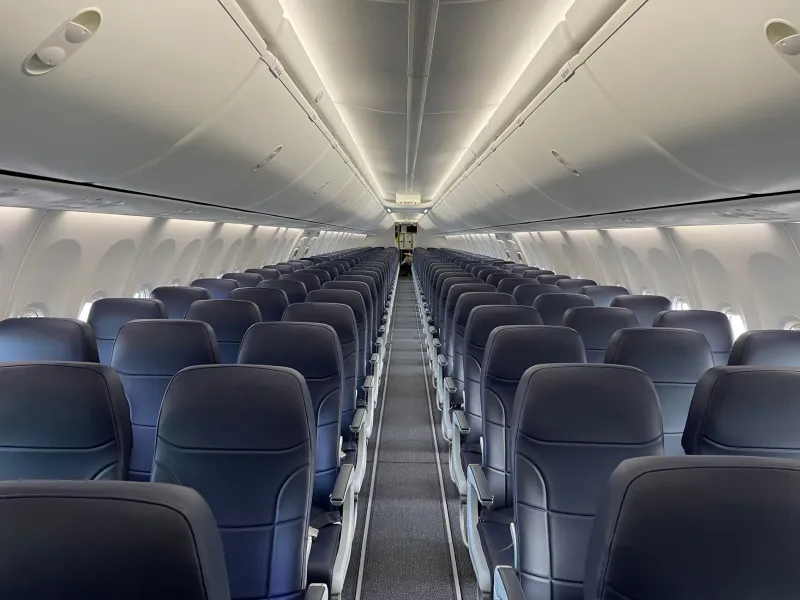
For passengers seated in the final rows of a wide-body aircraft, the in-seat power port is often more promise than utility. Charging times stretch. Laptops negotiate down to trickle rates. Phones that should reach full charge before landing arrive at the gate at sixty percent. These are not random equipment failures. They are, in many cases, the predictable consequence of an electrical distribution architecture that was never designed to deliver consistent power across the full length of a modern commercial cabin.
The problem is quiet, diffuse, and rarely attributed correctly — by passengers, by cabin crew, or by the airline operations teams reviewing complaint data. But the revenue implications are neither quiet nor diffuse. As ancillary income from in-flight connectivity, entertainment purchases, and productivity-oriented fare premiums grows into a meaningful line item for US carriers, the aft cabin power gap represents a structural drag that compounds with every long-haul departure.
The Physics Behind the Problem
Electrical resistance is not a design flaw. It is a fundamental property of conductive material, and in the context of a commercial aircraft, it means that every additional foot of wiring between a power distribution unit and an outlet introduces measurable voltage loss. On a Boeing 777 or an Airbus A350, the distance from the forward power distribution panel to the last row of economy seating can exceed 150 feet. On older wide-body configurations, that run may traverse multiple gauge transitions, junction points, and legacy bus connections — each one a potential site of additional resistance.
The result is a phenomenon engineers refer to as voltage drop: the difference between the nominal voltage leaving the distribution unit and the actual voltage arriving at the outlet. In a well-designed modern system, that differential is tightly managed. In legacy architectures — or in aircraft where cabin retrofit projects added outlet density without redesigning the underlying distribution topology — the drop can be significant enough to degrade charging performance materially.
Industry load testing conducted on narrow-body and wide-body aircraft in regular US domestic and international service has documented outlet voltages in aft economy sections running as much as eight to twelve percent below nominal under peak load conditions. For USB-A ports, that translates directly to reduced current delivery. For 110-volt AC outlets, it can trigger protective circuits in passenger devices that reduce or suspend charging entirely.
The Load Condition That Makes It Worse
Voltage drop is not a static condition. It scales with load — meaning the problem intensifies precisely when passengers are most likely to need reliable power: on long-haul routes with high cabin occupancy, during cruise phase when device usage peaks, and on overnight flights when passengers plug in before sleeping and expect devices to be charged on arrival.
Legacy power distribution architectures on many aircraft in the current US fleet were engineered around load assumptions that predate the smartphone era. A cabin designed in the late 1990s or early 2000s may have allocated electrical budget on the assumption that a fraction of passengers would use power at any given time, and that usage would be intermittent. The reality today is near-simultaneous peak load across an entire economy cabin, sustained for hours. The wiring was not sized for that condition, and the distribution topology was not designed to compensate for it.
The consequences fall disproportionately on aft rows because the forward sections of the cabin — closer to the distribution source — experience lower effective resistance under the same load. Business and premium economy sections, which are typically positioned forward and served by dedicated, higher-capacity distribution branches, are largely insulated from the problem. Economy passengers in rows thirty through fifty bear the burden of a system that was never architected to reach them reliably at scale.
Measuring the Revenue Leak
Quantifying the ancillary revenue impact of aft cabin power failures requires connecting two data streams that most airlines have historically managed in separate departments: technical reliability records from cabin systems maintenance, and passenger revenue data from ancillary product sales.
Carriers that have undertaken that analysis internally — and several US operators have begun doing so in earnest over the past three years — have found correlations that are difficult to dismiss. Passengers in seat rows with documented power delivery issues at or below a defined voltage threshold show lower rates of in-flight Wi-Fi purchase, lower engagement with paid entertainment tiers, and higher rates of negative post-flight survey responses that specifically cite technology reliability as a dissatisfier.
The mechanism is straightforward. A passenger who plugs in a laptop and receives no usable power within the first thirty minutes of a six-hour flight does not simply tolerate the inconvenience. That passenger adjusts their behavior: they conserve battery, reduce screen time, disengage from in-flight entertainment and connectivity products, and form a negative impression of the carrier's product that influences both satisfaction scores and future booking decisions. On a per-seat basis, the revenue impact may appear modest. Aggregated across hundreds of aft-cabin seats on dozens of daily departures, it becomes a number that warrants serious engineering investment.
What Forward-Thinking Carriers Are Doing
A small but growing cohort of US operators has begun approaching aft cabin power distribution as a discrete engineering problem rather than an incidental maintenance issue. The solutions vary in scope and cost, but several approaches have demonstrated measurable results.
The most comprehensive interventions involve redesigning distribution topology to introduce secondary distribution nodes positioned further aft in the cabin — effectively shortening the electrical run from source to outlet for the rows most affected by voltage drop. Rather than routing all power from a single forward panel, these architectures install intermediate distribution units that serve aft sections independently, with their own dedicated feeders sized for peak occupancy load. The capital cost is meaningful, but carriers that have completed these retrofits on wide-body fleets report measurable improvements in aft outlet voltage consistency and corresponding reductions in power-related passenger complaints.
Less capital-intensive interventions include wiring gauge upgrades on existing runs — replacing undersized conductors with heavier gauge wire that reduces resistance across the same physical distance — and the installation of active voltage regulation at the outlet or row level, which compensates for upstream drop by conditioning power locally before it reaches the passenger device. These approaches do not solve the underlying topology problem, but they can meaningfully improve performance within the constraints of existing infrastructure.
Some operators have also adopted intelligent load management systems that monitor real-time demand across cabin zones and shed or throttle non-critical loads during peak periods to protect outlet voltage in high-priority sections. The challenge is that in an economy cabin, there is no obvious load to shed — every occupied seat represents a passenger with a legitimate expectation of functional power.
The Equity Dimension Airlines Cannot Afford to Ignore
There is a dimension to this problem that transcends engineering and enters the domain of product strategy. Airlines that invest heavily in premium cabin power infrastructure while allowing economy cabin power delivery to degrade are, in effect, creating a two-tier connectivity experience defined not by fare class alone but by seat row. That distinction is increasingly visible to passengers, increasingly discussed in online forums and review platforms, and increasingly factored into booking decisions by the price-sensitive but technology-dependent travelers who fill economy cabins on long-haul routes.
For US carriers competing on thin margins in a market where ancillary revenue has become structurally important to profitability, the aft cabin power gap is not a peripheral maintenance concern. It is a product integrity issue with a measurable revenue signature — and the carriers that address it systematically will be better positioned to monetize the connected cabin experience across every row, not just the ones closest to the front.