Deferral Is Not Free: The Compounding Liabilities Airlines Accumulate by Postponing Cabin Power Modernization
There is a particular kind of organizational logic that treats capital expenditure deferral as a form of savings. Within airline finance departments — where fuel hedges, lease obligations, and labor agreements compete relentlessly for budget priority — pushing cabin power upgrades to the following fiscal year can appear, on paper, to be a rational act of resource management. The problem is that the paper is wrong.
The decision to delay modernization of in-cabin power infrastructure is not a neutral choice. It is a choice with a price — one that does not appear on a single line of the balance sheet but accumulates across maintenance ledgers, revenue reports, loyalty program analytics, and competitive positioning assessments simultaneously. Understanding the full scope of that price requires looking beyond the capital expenditure column entirely.
The Maintenance Trap: When Aging Systems Cost More to Keep Than to Replace
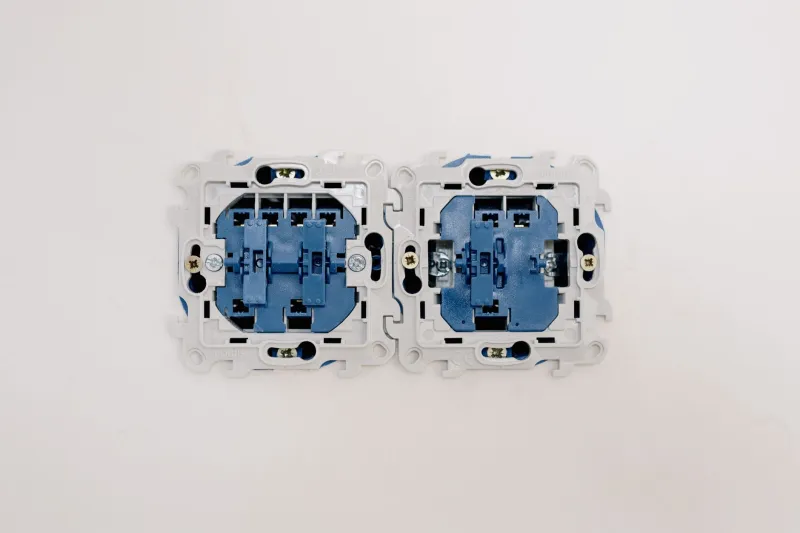
Legacy in-seat power units — particularly older 110-volt AC systems installed during the mid-2000s retrofit wave — were not engineered for the power demands of today's passenger devices. Laptops, tablets, and high-wattage USB-C chargers draw more current than the original specifications anticipated. The result is a pattern well-documented by MRO providers across the US domestic fleet: accelerated component wear, elevated failure rates, and maintenance intervals that compress over time rather than holding steady.
What begins as an occasional seat-level power fault becomes a recurring maintenance event. Technicians log growing hours against power management units that are increasingly difficult to source parts for, as original equipment manufacturers shift their support infrastructure toward current-generation hardware. Airlines that have tracked total cost of ownership on aging power systems report that per-seat annual maintenance expenditure on units older than eight years can run two to three times the figure associated with modern equivalents — before factoring in the revenue impact of seats that cycle in and out of service availability.
The capital cost of a retrofit program looks substantially different when placed alongside a multi-year projection of escalating maintenance spend on the system it would replace. Deferral, in this context, does not eliminate the expenditure. It redistributes it into a form that is both less efficient and less visible.
Passenger Attrition: Quantifying the Revenue Leak
The commercial case against inaction extends well beyond the maintenance bay. Passenger expectations around in-seat power have undergone a fundamental shift over the past decade, and that shift has been particularly pronounced among the business and premium economy travelers who generate disproportionate revenue per seat mile for US carriers.
J.D. Power's annual North America Airline Satisfaction Study has consistently identified in-flight connectivity and power access as top-tier drivers of passenger satisfaction — and, critically, of rebooking behavior. Travelers who experience power failures or discover non-functional seat outlets are not simply inconvenienced; research across the hospitality and travel sectors consistently shows that a single negative technology experience materially reduces the probability of a repeat purchase at the same price point. For carriers competing on business routes between major US hubs, where the margin between a loyal corporate account and a defection to a competitor can be a single unsatisfactory flight, this is not a minor data point.
The difficulty is that passenger attrition attributable to cabin product deficiencies rarely appears in a form that finance teams recognize as connected to infrastructure decisions. The traveler who quietly shifts their Chicago-to-New York bookings from one carrier to another after two consecutive flights with dead seat power does not file a complaint that gets coded against the power system. The revenue simply moves. Airlines that have invested in post-flight survey analytics and loyalty program defection modeling have found these connections — but they require deliberate effort to surface, and organizations that have not built that analytical infrastructure are, by definition, blind to the cost they are absorbing.
The Competitive Clock: Retrofit Timelines Are Accelerating
The strategic dimension of deferral is perhaps the most underappreciated element of the calculus. US carriers that have committed to fleet-wide power modernization programs are not moving slowly. Several major domestic operators have announced or are executing cabin retrofit programs that combine seat power upgrades with next-generation in-flight entertainment and connectivity infrastructure — programs that, once complete, will create a measurable and durable product gap between their cabins and those of carriers that have postponed investment.
Retrofit programs of meaningful scale require lead time: engineering assessments, regulatory approvals, vendor procurement, hangar scheduling, and crew familiarization. An airline that decides today to begin a serious power modernization initiative will not complete it quickly. An airline that defers that decision by two or three years will find, when it finally moves, that it is competing for MRO capacity, hardware supply, and engineering resources in a market that has been shaped by the carriers that acted earlier. Timelines lengthen, costs rise, and the product gap widens throughout the delay period.
This is the compounding mechanism that makes deferral genuinely dangerous rather than merely suboptimal. Each quarter of inaction does not simply push the problem forward by one quarter — it increases the cost of the eventual solution while simultaneously allowing competitors to extend their lead.
Reframing the Finance Department Conversation
The most constructive response to the deferral problem is not to argue that airlines should spend money they do not have. It is to insist on an accurate accounting of what deferral actually costs.
Finance teams that evaluate cabin power modernization purely as a capital outlay are working with an incomplete model. A complete model would incorporate: the projected maintenance cost trajectory of aging power systems, expressed as a multi-year total; the estimated revenue impact of power-related passenger dissatisfaction, modeled against loyalty data and competitive booking patterns; the premium on retrofit execution that accumulates as competing carriers consume available MRO capacity; and the risk-adjusted cost of a significant in-flight power incident involving non-compliant legacy hardware.
When those figures are assembled alongside the capital cost of a modernization program, the conversation changes. Deferral is no longer the conservative option. It is the option with the less visible but equally real cost structure — one that finance teams have, until recently, lacked the data infrastructure to model accurately.
The airlines that will navigate the next decade of cabin product competition most effectively are those that have already recognized this. They are not treating power infrastructure as a cost to be minimized. They are treating it as a liability to be managed — and they understand that the liability grows when left unaddressed.
For US carriers still weighing whether to act, the relevant question is no longer whether modernization is worth the investment. It is whether they can afford the compounding cost of continuing to wait.