Battery Bags at the Gate: The Policy Gap Around Passenger Power Banks
Photo: Christian Flores from Carlsbad / Encinitas, United States of America, CC BY-SA 2.0, via Wikimedia Commons
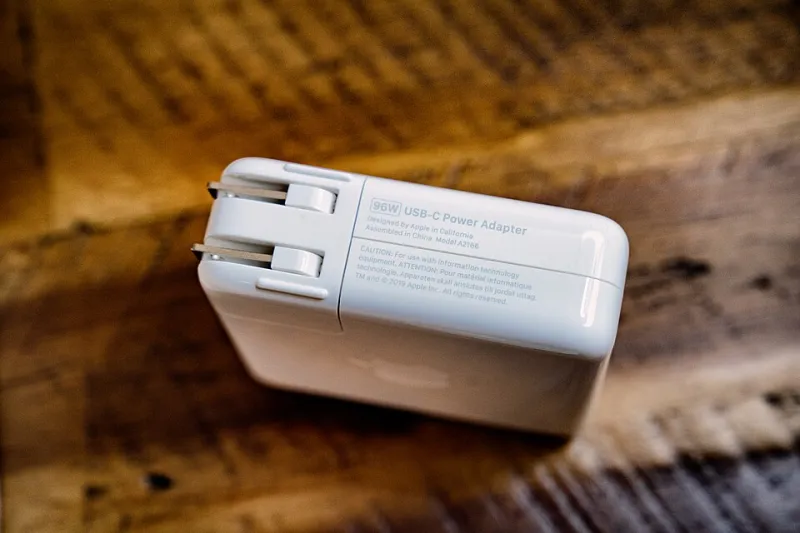
The power bank has become a standard item in the modern carry-on. Passengers use it to keep phones, tablets, and laptops alive through long connections, delays, and cabins where seat power is unavailable or unreliable. As battery capacities grow, so does the safety question: how should US airlines govern devices that can store enough energy to create a serious fire risk in an enclosed cabin?
The issue sits at the intersection of passenger behavior, federal guidance, and carrier policy. It is also a symptom of a broader power problem. When passengers cannot trust the seat outlet, they bring their own electricity. That makes the power bank predicament partly a cabin power issue, not merely a security screening issue.
The Rules as They Stand
FAA guidance treats power banks as spare lithium-ion batteries. They must travel in carry-on baggage rather than checked baggage. Cells rated at or below 100 watt-hours may generally be carried without airline approval; cells between 100 and 160 watt-hours require carrier approval; cells above 160 watt-hours are prohibited. Carriers are expected to incorporate those limits into their conditions of carriage and crew procedures.
In practice, enforcement is uneven. TSA screening is focused on security threats, not on verifying whether a passenger's power bank exceeds a particular airline's acceptance threshold. Gate agents rarely inspect capacity labels, and many passengers do not know that watt-hour ratings differ from the milliamp-hour figures printed on consumer packaging. Some carriers have moved to restrict onboard use of power banks or require them to remain visible, but US policies remain less uniform than the rules for checked baggage.
Where Enforcement Breaks Down
A policy that depends on self-declaration will always have gaps. Power banks are small, common, and easy to overlook. Capacity labels are often tiny or absent, and counterfeit products may misstate their ratings. Gate staff are under pressure to board flights quickly, and cabin crew cannot inspect every passenger's bag after boarding.
The result is a system in which the formal rule is clear but the practical check is weak. That inconsistency creates both safety exposure and fairness concerns. A passenger who follows the rules may sit beside someone carrying a noncompliant battery, and a crew member may have no reliable way to identify the risk before a thermal event occurs.
Fire Risk and Liability Exposure
Lithium-ion thermal runaway is difficult to manage in any environment, and an aircraft cabin adds confined space, limited suppression options, and high consequences. Crew training and containment equipment matter, but prevention is preferable. Carriers that fail to apply consistent gate and cabin policies may face liability questions after an incident, particularly if their own procedures were unclear or inconsistently enforced.
Liability is not limited to the battery owner. Airlines set conditions of carriage, train crews, and control boarding. A carrier that markets itself as safety-focused while allowing obvious policy gaps may find those gaps difficult to explain in litigation or regulatory review. The stronger approach is a documented, repeatable process that passengers can understand before they reach the gate.
Could In-Seat Power Reduce the Urge?
Better in-seat power can reduce demand for power banks, especially among passengers who carry them mainly as insurance against dead outlets. If a passenger knows that a seat outlet will work, the case for a 20,000 mAh backup battery weakens. That is a genuine safety benefit, and it gives airlines another reason to invest in reliable cabin power.
But in-seat power is not a complete substitute for battery policy. Some passengers carry high-capacity banks for cameras, drones, medical equipment, or multi-day trips. Others will continue to bring backups regardless of seat power. Airlines should treat improved cabin electricity as a demand-side mitigation, not as a reason to relax enforcement.
A Practical Policy Stack
A workable US approach should start with clear capacity limits at the point of sale and at the gate. Carriers should publish watt-hour limits in plain language, train gate agents to spot obviously oversized batteries, and make announcements before boarding. Crews should know how to respond to a smoking or overheating power bank, and carriers should track incidents by device type and capacity where possible.
Onboard charging of power banks is another policy question. Some carriers prohibit it; others do not address it. A consistent rule, clearly communicated, would reduce ambiguity. Finally, airlines should collect data on power-bank incidents and near misses, just as they track other cabin safety events. The power bank predicament will not be solved by a single announcement, but it can be managed with clearer rules, better enforcement, and more reliable seat power.