The Middle Seat Power Problem: How Armrest Charging Ports Are Reshaping Cabin Retrofit Strategy
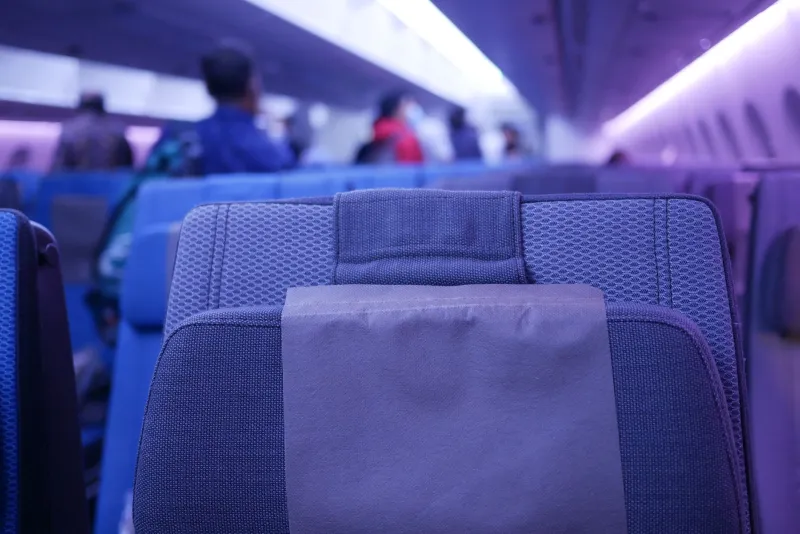
For the better part of a decade, the in-flight power conversation has centered on whether aircraft have enough outlets — not on where those outlets are placed. That framing, it turns out, has obscured a structural inequity that is only now receiving the scrutiny it deserves. In the three-seat economy row that defines the bulk of US domestic capacity, the middle seat passenger has long been treated as an afterthought when it comes to power access. Window seats benefit from proximity to fuselage-mounted units. Aisle seats enjoy convenient reach to under-seat or seatback ports. The passenger in between — statistically the least preferred seat on any aircraft — is frequently left with no viable charging option at all.
That gap is no longer a minor inconvenience. As device dependency among air travelers continues to grow and business passengers increasingly expect uninterrupted productivity in the air, the absence of reliable middle-seat power has become a measurable liability for US carriers competing on cabin experience.
A Structural Problem With Structural Roots
The reasons middle seats have historically been deprioritized are not arbitrary. Cabin power architecture on legacy narrowbody fleets — the Boeing 737 and Airbus A320 families that dominate US domestic operations — was largely designed before personal device charging became a standard passenger expectation. When airlines began retrofitting power solutions onto existing platforms, the path of least resistance was to install outlets at window and aisle positions, where routing power cabling was comparatively straightforward.
Armrests present a fundamentally different engineering challenge. Unlike fixed seatback or under-seat locations, armrests are shared structures subject to repeated mechanical stress, passenger contact, and frequent adjustment. Integrating a USB or AC outlet into an armrest requires solving for durability, moisture resistance, cable management across a moving joint, and compliance with FAA certification standards — all within a component that seat manufacturers originally designed with no power function in mind.
The result has been a slow-moving retrofit market where armrest power solutions existed in concept long before they became commercially viable at scale.
What Passenger Data Is Telling Airlines
The business case for closing the middle-seat power gap has grown considerably stronger as airlines have invested in more granular cabin satisfaction research. Survey data consistently shows that power availability ranks among the top three factors influencing economy class satisfaction on flights exceeding two hours — a threshold that encompasses the majority of US domestic routes. More pointedly, passengers who report being unable to charge their devices during a flight score overall cabin experience significantly lower, regardless of other service variables.
What has shifted in recent years is the ability to isolate middle-seat dissatisfaction as a distinct data point. As carriers have refined their post-flight survey instruments and cross-referenced responses with seat assignments, a clear pattern has emerged: middle-seat passengers report power-related frustration at rates substantially higher than their window and aisle counterparts. On aircraft where power outlets are installed only at window and aisle positions, middle-seat passengers are effectively excluded from a benefit that the carrier is already providing to two-thirds of the row.
For airlines managing loyalty programs and premium economy upsell strategies, this asymmetry carries real commercial consequences. A passenger who consistently receives inferior power access in the middle seat has a quantifiable incentive to either pay for an upgrade or choose a competitor with more equitable cabin infrastructure.
The Retrofit Opportunity Taking Shape
Recognizing both the problem and the market, seat manufacturers and MRO providers have accelerated development of modular armrest power solutions designed specifically for retrofit applications. The core value proposition of these products is that they can be integrated into existing seat rows without requiring a full cabin reconfiguration or new seat installation — a critical consideration given the cost and downtime associated with comprehensive cabin overhauls.
Leading seat suppliers have introduced armrest assemblies that incorporate USB-A, USB-C, and in some configurations low-wattage AC outlets within a self-contained module. These units are engineered to interface with a row's existing power distribution architecture, drawing from the same under-seat wiring that serves adjacent positions. The modular design allows operators to swap armrest components during scheduled maintenance events, minimizing aircraft-on-ground time and avoiding the need for line maintenance crews to engage in complex electrical work.
Certification remains a non-trivial consideration. Any modification to an aircraft's electrical system requires FAA approval through a Supplemental Type Certificate, and armrest power integration is no exception. Several suppliers have pursued STCs that cover specific seat and aircraft type combinations, allowing airlines to adopt validated solutions rather than pursuing custom certification programs independently. For US carriers operating large, homogeneous fleets, the availability of pre-certified armrest power modules significantly reduces the barrier to adoption.
Cost Tradeoffs and Fleet-Level Economics
The economics of armrest power retrofits require careful analysis at the fleet level. On a per-seat basis, adding a powered armrest module to existing rows is considerably less expensive than installing new seat units with integrated power. However, the aggregate cost across a large narrowbody fleet remains substantial, and airlines must weigh that investment against competing cabin upgrade priorities.
One framework gaining traction among fleet planning teams is to phase armrest power retrofits alongside scheduled interior maintenance events — particularly D-checks and cabin refresh programs that already require significant seat access. By bundling armrest power work into planned downtime, carriers can capture installation labor efficiencies and avoid incremental aircraft removals from service. This approach extends the timeline for full-fleet implementation but substantially reduces the net cost per aircraft.
The revenue side of the equation is also becoming easier to model. As more carriers have introduced tiered seat selection pricing that explicitly incorporates power availability as a differentiator, the incremental revenue attributable to power-equipped seats has become more transparent. Middle seats with confirmed charging access command measurably higher selection rates in ancillary revenue models — a data point that is beginning to inform retrofit investment decisions at the fleet planning level.
A Broader Signal for Cabin Design
The armrest power conversation is also prompting a more fundamental rethinking of how cabin power infrastructure is specified during aircraft procurement and interior design. For airlines placing new narrowbody orders or planning next-generation cabin interiors, the expectation that every seat position — including the middle — will have dedicated, high-wattage charging capability is increasingly treated as a baseline requirement rather than an enhancement.
Seat manufacturers responding to recent RFPs from US carriers report that power port placement and middle-seat access have become explicit evaluation criteria in competitive selection processes. That shift reflects a broader maturation in how the industry understands cabin power: not as a premium feature to be allocated selectively, but as a fundamental utility that passengers expect to be distributed equitably across the row.
For the middle seat passenger who has spent years watching seatmates charge their devices while their own battery drains, that shift cannot arrive soon enough. For the airlines and suppliers moving to address it, the retrofit window is open — and the competitive calculus is becoming increasingly clear.