Seat Power as a Loyalty Weapon: The Race to Retrofit US Fleets With Next-Generation Charging Before the Window Closes
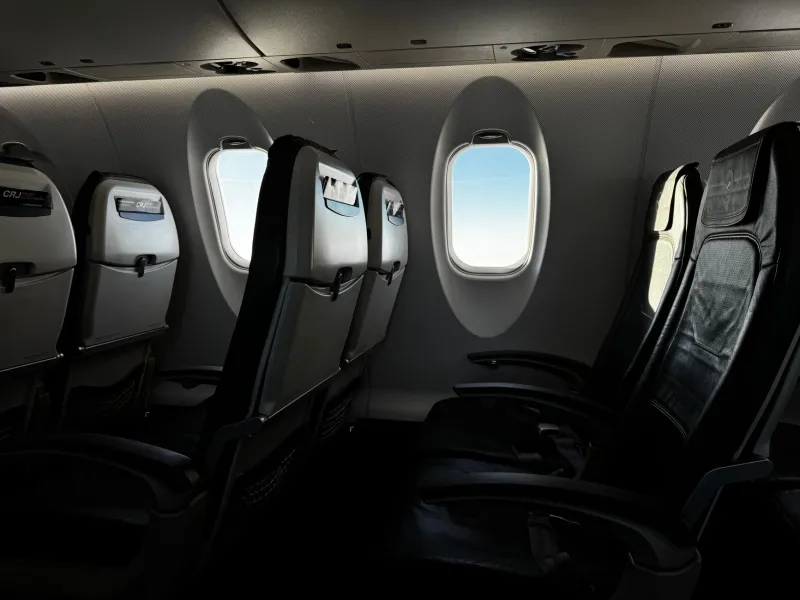
For most of commercial aviation's history, the in-seat power outlet was an afterthought—a convenience feature tucked beneath armrests and largely ignored by passengers content to sleep through short-haul flights. That era is over. Today, the average US air traveler boards with a smartphone, a laptop, wireless earbuds, and frequently a tablet, all of them competing for charge. The aircraft that cannot keep those devices alive is, in the eyes of a growing share of the traveling public, the inferior aircraft.
American carriers have taken notice. Across the industry, fleet modernization roadmaps now include aggressive seat-level power upgrades, with many operators targeting completion before the end of 2026. The motivations are both commercial and operational, and the engineering path to get there is considerably more complicated than simply swapping out an outlet.
Why 2026 Has Become the Informal Industry Deadline
The urgency is not arbitrary. Several converging pressures have made the next 18 to 24 months a critical window for action. First, the proliferation of USB-C as the dominant charging standard—accelerated by the widespread adoption of USB Power Delivery across consumer electronics—has rendered the older USB-A ports installed on many narrowbody aircraft functionally obsolete. Passengers attempting to fast-charge a modern laptop through a USB-A port are often disappointed to find the connection delivers far less power than their device requires.
Second, the competitive landscape has shifted. Airlines that have already completed meaningful cabin upgrades—particularly on transcontinental routes—are using seat power as a marketing differentiator in loyalty program communications and booking platform descriptions. Carriers that lag risk ceding ground on a metric that is increasingly searchable and reviewable by passengers before they ever book a ticket.
Third, and perhaps most consequentially, the FAA's Supplemental Type Certificate process creates a long lead time that forces airlines to begin engineering work well in advance of any planned installation date. For a carrier hoping to have USB-C and wireless charging available across a significant portion of its narrowbody fleet by late 2026, the engineering and certification groundwork needs to be underway now.
The Engineering Reality Behind a Simple-Looking Upgrade
From a passenger's perspective, adding a USB-C port or a wireless charging pad to a seat looks straightforward. From an engineering perspective, it is anything but. Legacy narrowbody aircraft—particularly older variants of the Boeing 737 and Airbus A320 family—were designed with power distribution architectures that did not anticipate the per-seat load demands of modern connected passengers.
A standard USB-A port might deliver 5 watts. A USB-C port using Power Delivery can deliver 60 to 100 watts. Multiply that by the number of seats in a typical single-aisle cabin, and the aggregate load increase is substantial. Cabin systems integrators working on retrofit programs consistently point to the power distribution infrastructure—wiring gauge, circuit protection, and seat-level power conversion units—as the primary engineering bottleneck, not the charging hardware itself.
Wireless charging introduces additional complexity. Qi-standard wireless pads embedded in seat surfaces or tray tables must be certified to operate without interfering with avionics systems, and the heat generated by wireless charging in an enclosed cabin environment requires thermal management solutions that add both weight and installation complexity.
"The hardware at the seat is the visible part of the iceberg," one cabin systems integrator noted in a recent industry forum. "The work that drives timeline and cost is everything running behind the panels—the power conversion units, the bus architecture, the certification documentation."
Narrowbody vs. Widebody: A Tale of Two Timelines
MRO providers draw a clear distinction between narrowbody and widebody retrofit programs, and the differences matter for airlines planning their upgrade sequencing.
Widebody aircraft—the Boeing 777, 787, and Airbus A330 and A350 families—were generally designed with more robust power distribution infrastructure and greater access to cabin wiring runs. Many widebody platforms already have higher-wattage seat power in premium cabins, and extending modern charging standards to economy class, while still a meaningful engineering effort, is typically more tractable than on narrowbodies.
Narrowbody fleets present a harder problem. The sheer volume of aircraft involved—US carriers operate hundreds of 737 and A320-family jets—means that even a well-resourced retrofit program takes years to complete at scale. MRO facilities have finite capacity, and each aircraft pulled from revenue service for a cabin retrofit represents a real cost. Industry estimates suggest a full seat-level power retrofit on a narrowbody aircraft, including engineering, certification, and installation labor, can take anywhere from three to five days of downtime per aircraft depending on the scope of work.
For a carrier operating 200 narrowbody aircraft, completing a full fleet retrofit within a two-year window requires careful slot planning across multiple MRO facilities—a logistical challenge that rivals the technical one.
The Certification Dimension
The FAA's STC process adds a layer of complexity that airlines sometimes underestimate when setting public retrofit commitments. Any modification to an aircraft's electrical system that affects load distribution, circuit protection, or seat structure requires engineering validation, testing, and documentation review before the FAA issues approval for fleet-wide installation.
For novel technologies—particularly wireless charging, which has no long-standing precedent in commercial aviation certification—the review process can extend the timeline significantly. Integrators working on wireless charging STCs have noted that demonstrating electromagnetic compatibility with avionics systems requires extensive bench and flight testing, and that the FAA's review queue for cabin modification STCs has lengthened as the volume of retrofit programs has increased industry-wide.
Carriers that are waiting for a competitor to obtain an STC and then licensing it—a common strategy for reducing certification cost and timeline—may find that the first-mover advantage in this cycle is more durable than in previous technology generations.
Power as a Differentiator in the Loyalty Economy
The commercial case for accelerating these investments is increasingly well-supported by passenger research. Surveys conducted by US travel industry groups consistently rank reliable in-seat power among the top cabin amenities that influence airline preference, particularly among business and premium economy travelers who represent a disproportionate share of revenue.
For frequent flyers enrolled in major loyalty programs, the presence or absence of adequate seat power on a given aircraft type is increasingly a factor in routing decisions—not just airline selection. An airline that can credibly advertise USB-C fast charging and wireless capability across its mainline narrowbody fleet is offering something tangible that translates into booking behavior.
The carriers that move earliest and most comprehensively on seat-level power upgrades are likely to establish a perception advantage that will be difficult for slower-moving competitors to close, even after those competitors complete their own retrofits. In the loyalty economy, being first matters.
Looking Ahead
The seat-level power retrofit wave is, by most industry assessments, already well underway and unlikely to slow. The engineering challenges are real but solvable, the certification path is demanding but navigable, and the commercial rationale is clear. What separates the carriers that will meet their 2026 targets from those that will not is largely a question of planning discipline—specifically, whether the engineering, procurement, MRO scheduling, and certification work was initiated early enough to survive the inevitable delays that complex fleet-wide programs encounter.
For airlines still in the planning stages, the message from integrators and MRO providers is consistent: the window for on-time completion is narrowing, and the cost of delay is measured not just in dollars, but in loyalty points that passengers are already beginning to award elsewhere.