Flying Blind on Power: The Case for Real-Time Electrical Load Visibility Across Commercial Aircraft Cabins
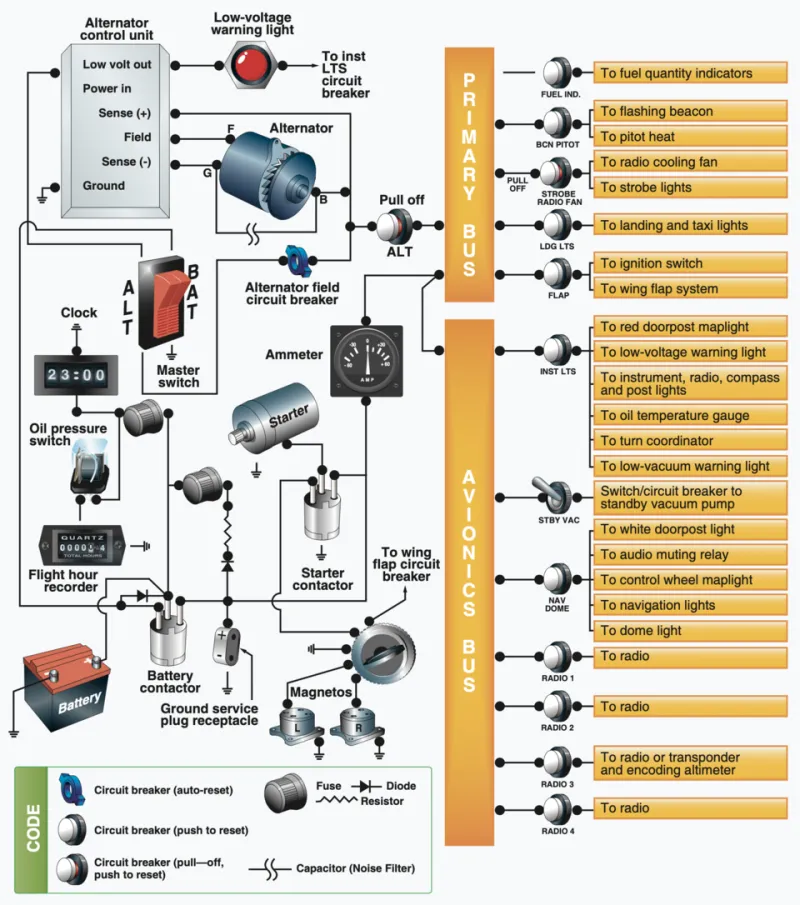
Photo: Federal Aviation Administration, Public domain, via Wikimedia Commons
Consider the information asymmetry at the center of modern aircraft cabin management. An airline operating a 160-seat narrow-body aircraft can tell you, in near real time, the status of its navigation systems, the performance envelope of its engines, and the precise fuel load remaining in its tanks. What it typically cannot tell you — with any meaningful granularity — is how much electricity its cabin is consuming at any given moment, where that consumption is concentrated, and whether the distribution matches design intent.
This is not a minor data gap. It is a structural blind spot with measurable financial consequences, and it persists across virtually the entire US commercial fleet.
The Scope of the Problem
Aircraft electrical systems are designed with significant load headroom. Engineers building cabin power architectures must account for worst-case scenarios: every seat electronics unit active simultaneously, every charging port at peak draw, galley equipment cycling at maximum demand. The result is a power infrastructure that is deliberately over-specified relative to average operating conditions.
Over-specification is not inherently problematic — it is prudent engineering. The problem arises when over-specification is the only tool available because real operational load data does not exist to inform more precise design decisions. Without consumption telemetry, engineers cannot distinguish between a cabin that genuinely requires a 200-ampere distribution capacity and one that rarely exceeds 140 amperes in normal service. The default is to build for the ceiling, every time.
For airlines, this translates into heavier power distribution infrastructure, higher wiring costs, and increased fuel burn — all to support a capacity ceiling that may never be approached in typical operations. The efficiency loss is diffuse, distributed across thousands of flight hours, and almost entirely invisible because no one is measuring it.
What Operators Currently Know — and Don't
Most commercial aircraft are equipped with some level of electrical system monitoring, but the granularity of that monitoring rarely extends to the cabin in a useful way. Flight deck instruments track bus voltages and generator output at a system level. Maintenance systems log fault codes when components fail. What is almost universally absent is continuous, seat-level or zone-level consumption telemetry that would allow operators to understand how cabin load actually behaves across a typical flight cycle.
The consequences of this gap manifest in several distinct ways.
Cascading failures without root cause clarity. When a cabin power distribution unit trips under load, maintenance teams frequently lack the consumption history needed to determine whether the event was caused by a genuine fault, a transient overload, or a systematic design mismatch between installed capacity and actual demand. Without that context, the corrective action defaults to component replacement rather than system optimization — an expensive and often ineffective response.
Preventive over-specification on retrofit projects. Airlines planning cabin power upgrades must make capacity decisions without reliable data on existing consumption patterns. The safe response is to specify generously, adding buffer capacity that may never be needed. This adds weight, cost, and installation complexity to projects that could be more precisely engineered if baseline consumption data were available.
Missed efficiency opportunities at the fleet level. Load management strategies that could reduce peak demand — and by extension, reduce the generator capacity required to support the cabin — are impossible to implement without real-time visibility. Airlines operating without consumption telemetry are, in effect, leaving energy efficiency improvements unclaimed because they lack the data infrastructure to identify them.
The Technology That Changes the Equation
The monitoring capabilities required to address this blind spot are not theoretical. Several technology suppliers have developed cabin power telemetry platforms capable of delivering zone-level or seat-level consumption data in real time, with integration pathways to existing aircraft health monitoring systems.
These platforms typically combine low-power current sensing hardware installed at distribution points throughout the cabin with software layers that aggregate, normalize, and transmit consumption data via existing aircraft connectivity infrastructure. The hardware footprint is modest — current sensing modules are small enough to be integrated into seat power units or distribution panels without significant weight penalty — and the data outputs are compatible with standard aviation data formats.
Some operators have begun deploying these systems on limited fleet segments as part of broader cabin health monitoring initiatives. Early results are instructive. Carriers that have installed consumption telemetry on pilot fleets report discovering load distribution patterns that diverged meaningfully from design assumptions — including zones that consistently operated near capacity limits while adjacent zones remained well below utilization thresholds, and flight phases during which total cabin draw spiked in ways that were not anticipated by the original power architecture.
This kind of operational intelligence has direct value. It informs maintenance prioritization, guides future retrofit specifications, and creates the data foundation for intelligent load management strategies that could reduce peak demand without degrading passenger experience.
The Regulatory and Industry Standards Gap
Despite the availability of capable monitoring technology, there is currently no FAA requirement for cabin power consumption reporting, no industry standard for consumption telemetry data formats, and no structured mechanism for aggregating fleet-level consumption data in ways that would benefit the broader industry.
This absence of standardization creates a fragmented landscape. Airlines that deploy monitoring systems do so with proprietary platforms that generate data in formats incompatible with those used by other carriers or OEM systems. The result is a collection of isolated data islands rather than an industry-wide visibility infrastructure.
The argument for standardization is straightforward. Cabin power consumption data, aggregated across aircraft types and operators, would allow the industry to establish realistic load profiles for common configurations — information that would improve the accuracy of retrofit specifications, reduce over-engineering, and support more effective regulatory guidance on cabin power architecture. Individual operators benefit from their own data; the industry benefits from everyone's.
Several aviation standards bodies have the mandate to address this gap. The absence of a formal initiative to do so is a policy failure that the industry should name explicitly.
The Efficiency Case Is Not Hypothetical
Skeptics of cabin power telemetry investment sometimes argue that the efficiency gains are too diffuse to justify the infrastructure cost. The arithmetic does not support that position.
A US major carrier operating 400 narrow-body aircraft, each completing six flight cycles per day, accumulates roughly 875,000 flight cycles annually. If real-time load visibility enables even a modest reduction in average cabin power draw — through better load management, more precise retrofit specifications, or earlier identification of anomalous consumption — the fuel savings across that operating volume are substantial. At current jet fuel prices, a one-percent reduction in cabin electrical demand across a fleet of that scale represents millions of dollars in annual savings.
The efficiency case is compounded by the maintenance savings from earlier fault detection. Consumption anomalies that precede component failures — elevated draw from a degrading power controller, asymmetric load distribution indicating a failing distribution unit — are detectable through telemetry before they manifest as in-service failures. Predictive maintenance enabled by consumption data reduces unscheduled events, improves aircraft availability, and lowers the cost per maintenance action.
An Industry Standard Whose Time Has Come
The commercial aviation industry has, over the past decade, made significant investments in engine health monitoring, structural health monitoring, and avionics diagnostics. The logic underlying those investments — that real-time operational data enables better decisions, reduces costs, and improves reliability — applies with equal force to cabin power systems.
The fact that most US carriers are currently flying without meaningful cabin consumption visibility is not a reflection of the technology's limitations. It is a reflection of the industry's slow recognition that cabin electrical infrastructure has grown complex enough to warrant the same monitoring discipline applied to other critical aircraft systems.
That recognition is overdue. The data infrastructure to support it exists. What is needed now is the industry will to make cabin power transparency a standard — not an option.