Grounded by Paperwork: How FAA Certification Timelines Are Holding Next-Generation Cabin Power Hostage
Photo: US Federal Government, Federal Aviation Administration, Public domain, via Wikimedia Commons
In the commercial aviation industry, timing is rarely a luxury. Fleet planning cycles, passenger expectations, and ancillary revenue targets all operate on compressed schedules. Yet one variable continues to defy acceleration: the Federal Aviation Administration's certification process. For airlines and avionics suppliers developing next-generation cabin power and connectivity solutions, the FAA's approval timeline has become less a procedural formality and more a structural ceiling — one that is quietly costing the industry competitive ground and measurable revenue.
The problem is not that safety standards are too rigorous. Aviation's safety record depends on them. The problem is that the regulatory machinery governing electrical and cabin technology approvals was engineered for a different era — one in which power systems changed slowly, incrementally, and predictably. Today's cabin technology landscape looks nothing like that world.
A Framework Built for Yesterday's Aircraft
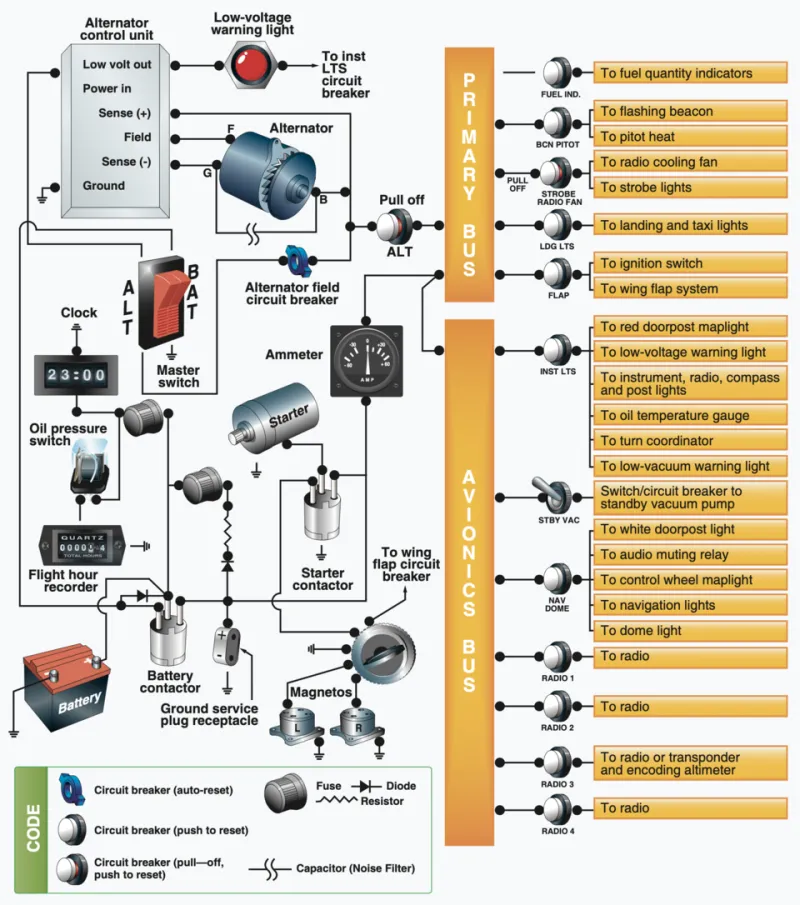
The FAA's current Supplemental Type Certificate (STC) process, which governs most cabin retrofit and power system modifications, was structured around a relatively stable technological baseline. Aircraft electrical systems, once dominated by straightforward AC and DC distribution architectures, are now expected to support USB-C Power Delivery, high-density seat electronics, wireless access point arrays, and integrated energy storage modules — often simultaneously.
The certification pathway has not kept pace. Industry sources familiar with the STC process describe a review environment in which novel power topologies — particularly those involving lithium-based energy storage or bidirectional power management — can remain in evaluation for 18 to 36 months, sometimes longer. For a technology that may already be deployed commercially in ground-based or automotive applications, that timeline represents a significant market disadvantage.
One regional avionics supplier, speaking on background, described a cabin power controller cleared for commercial use in the European Union Aviation Safety Agency's jurisdiction nearly two years before receiving equivalent FAA authorization. During that window, US carriers seeking to install the unit were effectively locked out — not because the technology was unsafe, but because the domestic approval queue had not yet processed the submission.
The Compliance-Competitiveness Tension
For airline procurement teams, the certification ceiling creates a specific kind of institutional paralysis. Carriers evaluating new power infrastructure face a binary choice that should not exist: deploy proven but aging technology that clears certification without friction, or commit capital to next-generation systems that may not receive approval before the fleet planning window closes.
This tension surfaces most acutely during aircraft refurbishment cycles. A narrow-body operator planning a mid-life cabin refresh on a 737 or A320 family aircraft typically works with a 24-to-36-month project horizon. If a superior power management solution enters the FAA queue 18 months before the installation window opens, there is no guarantee it will be cleared in time. Procurement teams, unwilling to gamble retrofit schedules on regulatory uncertainty, default to certified alternatives — even when those alternatives represent older generations of the technology.
The downstream consequence is a cabin technology gap that compounds over successive fleet cycles. Airlines that consistently choose the certified-but-inferior option fall progressively further behind carriers operating in regulatory environments with faster approval pathways.
Case Patterns: Where the Delays Concentrate
Certification delays are not uniformly distributed across technology categories. Analysis of industry STC activity suggests that approval friction concentrates in several specific areas.
High-density USB-C charging architectures have faced extended review periods, particularly where power delivery profiles exceed legacy USB specifications. Reviewers accustomed to evaluating fixed-output charging systems have required additional documentation cycles when confronted with dynamic power negotiation protocols.
Onboard energy storage systems — including those designed to buffer peak cabin loads and reduce APU dependency — represent perhaps the most acute certification bottleneck. The FAA's existing framework for lithium cell installations was developed primarily around portable electronic device containment rather than integrated aircraft power management. Applying that framework to purpose-built cabin storage modules requires interpretive work that adds time and uncertainty to every submission.
Wireless power management platforms, which aggregate consumption data across seat electronics and dynamically allocate power distribution, have similarly encountered review delays stemming from the absence of a clear certification category. Novel technologies that do not map cleanly onto existing Advisory Circular guidance tend to generate requests for additional data — a process that can extend timelines by six months or more per iteration.
Industry Pushback and the Case for Modernized Pathways
The industry's response to certification friction has moved from private frustration to organized advocacy. Several aviation trade groups have submitted formal comments to the FAA urging the development of dedicated approval pathways for cabin power and connectivity systems — analogous to the streamlined processes that exist for certain avionics software updates under FAA Order 8110.49.
The argument is straightforward: cabin electrical systems, while safety-critical, operate in a more contained risk environment than primary flight controls or propulsion systems. A tiered certification framework that calibrates review intensity to actual safety exposure could substantially reduce approval timelines without compromising the standards that define aviation safety.
Some manufacturers have pursued alternative strategies. Several have structured their US market submissions to leverage previously approved components wherever possible, deliberately engineering around novel elements to reduce the surface area of regulatory scrutiny. While pragmatic, this approach has a limiting effect on innovation — it essentially allows the certification process to shape product design rather than evaluate it.
What an Accelerated Future Might Look Like
Modernizing the FAA's approach to cabin power certification does not require dismantling the agency's safety mandate. It requires recognizing that the current process was not designed for the pace at which cabin technology now evolves.
Specific reforms with industry support include the establishment of pre-submission consultation programs for novel power architectures, the creation of dedicated technical specialists within the FAA's Aircraft Certification Service for cabin electrical systems, and the development of performance-based certification standards that evaluate outcomes rather than prescribing specific design configurations.
Some of these mechanisms already exist in nascent form. The FAA's Aviation Rulemaking Advisory Committee has addressed related topics, and the agency's ongoing modernization initiatives under the Aircraft Certification, Safety, and Accountability Act of 2020 provide a legislative foundation for expanded reform. The question is whether implementation will move at a pace that keeps US carriers competitive.
The Strategic Cost of Standing Still
For airline executives evaluating capital allocation, the certification ceiling is not an abstraction. Every quarter that a superior power management system sits in regulatory limbo is a quarter in which passenger satisfaction data continues to reflect the limitations of older infrastructure. Every fleet cycle in which procurement teams default to certified-but-dated technology is a cycle in which the competitive gap widens.
The FAA's role as a safety guarantor is indispensable. But safety and speed are not inherently opposed. A certification framework calibrated to the actual risk profile of cabin power technology — rather than one that applies uniform scrutiny regardless of safety exposure — would serve both the agency's mission and the industry's need to remain competitive at altitude.