When Every Seat Draws Power: The Cumulative Electrical Load Crisis Hiding Inside the Modern Cabin
For most of commercial aviation's history, electrical load planning was a relatively predictable discipline. Engineers could model galley cycling, lighting demand, and avionics consumption with reasonable confidence. Passenger behavior — beyond reading lights and the occasional overhead fan — contributed almost nothing to the calculation. That era is over.
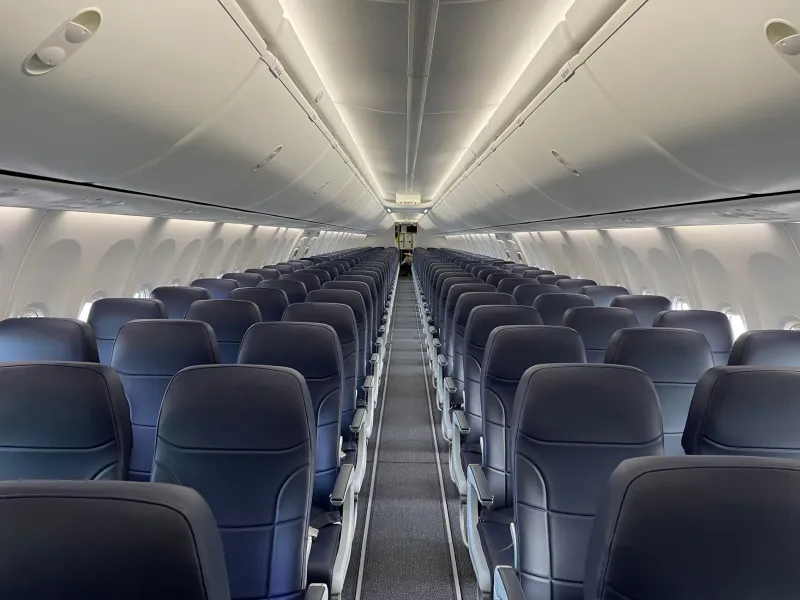
Today's aircraft cabin is a distributed power network serving hundreds of simultaneous consumers. Seatback IFE screens running 4K content. Wireless streaming access points cycling at full throughput. USB-A and USB-C charging ports drawing variable loads depending on what each passenger has plugged in. Bluetooth audio devices pairing and unpairing throughout the flight. The combined electrical appetite of these systems, when aggregated across a fully loaded narrowbody or widebody, is something most legacy electrical load analysis tools were never designed to model — and the industry is beginning to feel the consequences.
The Load Calculation Problem Nobody Advertised
When aircraft manufacturers and cabin integrators publish power specifications for in-flight entertainment and connectivity (IFEC) systems, they typically present per-seat or per-zone consumption figures under nominal operating conditions. What those figures rarely capture is the simultaneous peak demand scenario — the moment during a cross-country flight when a full complement of passengers are all charging devices, streaming content, and running seatback screens at maximum brightness.
Electrical engineers refer to this as coincident demand: the probability that multiple loads will peak at the same time. In residential and commercial building design, coincident demand factors are well-established. In aircraft cabin design, they have historically been applied conservatively — because historical cabins did not generate meaningful coincident demand from passengers.
Modern cabins do. A 180-seat narrowbody equipped with full seatback IFE, dual USB charging per seat, and an onboard wireless streaming server can theoretically draw upward of 90 to 120 kilowatts from passenger-facing systems alone under peak conditions. That figure, while variable by configuration, represents a non-trivial fraction of total generator capacity on aircraft like the Boeing 737 MAX or Airbus A320neo — platforms whose electrical architectures were designed and certified before the connected cabin became the industry standard.
Real-World Failures Are Already Occurring
The stress is not theoretical. Operators flying high-density configurations on older narrowbody variants — particularly pre-retrofit 737-800s and A320ceos equipped with aftermarket IFE systems — have reported anomalous behavior consistent with electrical load saturation. Symptoms include intermittent seatback screen resets during peak flight hours, USB port deactivation in aft cabin zones, and in isolated cases, nuisance tripping of circuit protection devices governing cabin power buses.
These events are rarely attributed publicly to electrical overload. Airlines typically classify them under IFE system reliability metrics or maintenance write-ups, and the root cause — aggregate passenger charging demand exceeding design margins — often goes unidentified until a systematic review is conducted. For operators managing tight turn times and minimal maintenance windows, that review rarely happens proactively.
Long-haul widebody operators face a distinct version of the problem. On aircraft like the Boeing 777 or Airbus A350, raw generator capacity is substantially higher, but so is passenger count and the sophistication of installed IFEC systems. Premium cabin seats with personal power outlets rated at 110 volts AC, combined with high-power USB-C ports in economy, create layered demand profiles that interact with galley load cycling in ways that stress electrical load management systems (ELMS) during specific flight phases.
Why Traditional Load Analysis Falls Short
Conventional electrical load analysis (ELA) for aircraft follows a methodology established over decades of regulatory practice. Engineers document every electrical consumer, assign it a load value, and model consumption across defined flight phases — ground, takeoff, cruise, descent, and landing. The methodology is rigorous for fixed or predictable loads.
Passenger device charging is neither fixed nor predictable. It is behavioral. A flight departing at 7:00 a.m. out of Chicago O'Hare will see different charging demand patterns than an evening departure from Los Angeles International. Business travelers tend to charge aggressively early in flight; leisure passengers on longer routes charge more continuously. Flights carrying a high proportion of passengers with newer, high-capacity laptop batteries — particularly those with USB-C Power Delivery profiles requesting 45 to 100 watts — generate substantially more demand than flights where older, lower-capacity devices dominate.
None of these behavioral variables appear in traditional ELA documentation. The result is a structural blind spot: aircraft are certified against a load model that does not reflect how passengers actually consume power in 2025.
The Role of Power Management Intelligence
Several IFEC suppliers and aircraft systems integrators have begun addressing this gap through active power management architectures. Rather than providing unregulated power to every seat simultaneously, these systems implement dynamic load shedding — prioritizing IFE screen function and capping charging port output during periods of high aggregate demand. Some implementations use seat occupancy data from cabin management systems to modulate power delivery in real time, reducing consumption in unoccupied seat clusters.
Thales, Panasonic Avionics, and Collins Aerospace have each introduced or announced power-aware IFEC platforms in recent years that incorporate some form of intelligent load management. The challenge for airlines is that these capabilities require either new hardware installations or significant software updates to existing systems — investments that compete for budget against other cabin upgrade priorities.
For operators flying older IFE architectures, the near-term options are more limited. Some have implemented manual load management procedures, instructing cabin crew to disable charging port banks during specific flight phases. Others have accepted degraded charging performance as an operational reality, a decision that carries measurable passenger satisfaction consequences at a time when seat power reliability ranks among the top factors in traveler loyalty surveys.
What Airlines Need to Do Now
The first step for any operator that has not recently conducted a passenger-inclusive electrical load review is to commission one. This means moving beyond legacy ELA documentation and modeling actual in-cabin power demand under realistic coincident load assumptions — including behavioral data from onboard charging port telemetry where available.
Second, airlines evaluating new IFE contracts or cabin retrofit programs should require vendors to provide system-level power consumption data under peak coincident demand conditions, not just nominal figures. Contractual specifications that reference average load without addressing peak scenarios are insufficient for managing the risk described here.
Third, fleet planning teams should engage with airframe manufacturers and MRO partners on the specific electrical margin profiles of each aircraft type in their operation. The gap between certified electrical capacity and actual peak demand under a fully connected cabin load is not uniform across fleet types, and understanding where individual aircraft are operating closest to their margins is essential for prioritizing upgrade investments.
The connected cabin has delivered genuine value to airlines and passengers alike. But the electrical infrastructure supporting it was largely designed for a different era. Closing the gap between what modern cabins demand and what aircraft power systems were built to supply is not an optional refinement — it is an operational imperative that is growing more urgent with every new device passengers bring aboard.