When Atmosphere Becomes Adversary: The Regulatory and Financial Exposure Hidden in Aircraft Power System Design
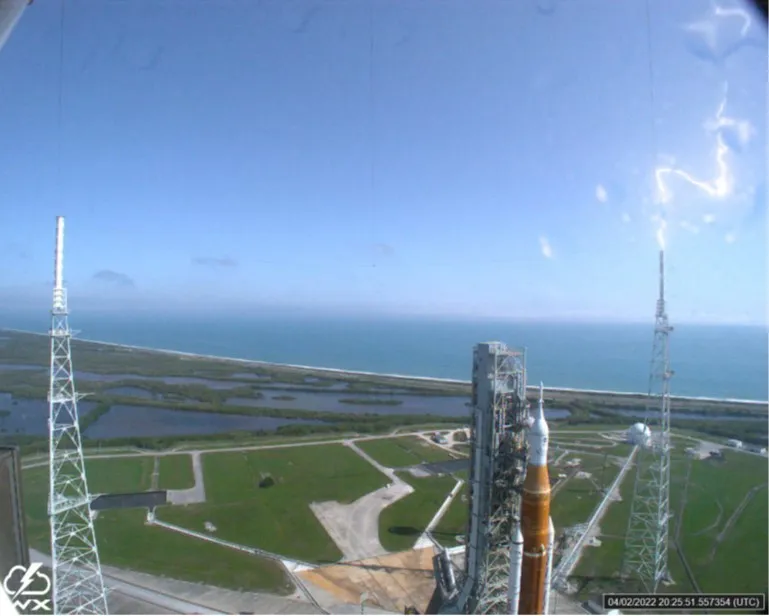
Photo: NASA Kennedy Space Center / NASA, Public domain, via Wikimedia Commons
Lightning strikes on commercial aircraft are more common than most passengers realize. Industry estimates suggest that the average commercial aircraft is struck at least once per year, and the US airspace system — with its dense traffic, continental weather patterns, and high-frequency thunderstorm activity across the Southeast and Midwest — creates conditions where atmospheric electrical events are a routine operational reality rather than a rare anomaly.
For most strikes, the aircraft's designed protection systems function as intended, and the event goes unnoticed by everyone except the flight crew and maintenance teams who conduct the mandatory post-strike inspection. But as cabin electrical systems have grown more complex, more densely interconnected, and more dependent on sensitive microelectronics, the consequences of inadequate surge protection have become harder to contain — and harder to explain to regulators and insurers.
The Architecture Problem Predates the Risk
Many commercial aircraft operating in the US fleet today were designed and certified before the current generation of cabin technology existed. The electrical architecture standards applied during original type certification reflected the power demands and component sensitivity profiles of their era. IFE systems were simpler. Connectivity hardware was absent or rudimentary. The density of microprocessor-controlled equipment throughout the cabin was a fraction of what it is today.
Surge protection specifications written for that environment are not automatically adequate for an aircraft that has since been retrofitted with satellite connectivity hardware, USB-C charging infrastructure distributed across hundreds of seats, and IFE servers that communicate continuously with ground-based content management systems. Each of these additions introduces new pathways through which an induced electrical transient — the kind that a lightning strike can generate in a conductor running through an airframe — can propagate to sensitive electronics.
The FAA's advisory circular framework governing electrical system design and lightning protection has evolved over time, but the gap between current guidance and the actual protection standards built into legacy aircraft remains a live compliance issue for many operators.
What the FAA Guidance Actually Requires
FAA Advisory Circular 20-136, which addresses aircraft electrical and electronic system lightning protection, establishes performance standards for protecting aircraft systems against the effects of both direct and indirect lightning effects. Indirect effects — the induced currents and voltage transients that propagate through aircraft wiring when a strike occurs nearby — are the primary concern for cabin electronics, which are rarely in the direct current path but can still be damaged by transients traveling through shared electrical infrastructure.
For operators retrofitting new cabin systems onto existing airframes, the compliance question is not always straightforward. Supplemental Type Certificate processes require that new equipment be shown not to compromise the existing aircraft's overall lightning protection posture. But the cumulative effect of multiple independent retrofits — each individually compliant — on the aircraft's overall electrical architecture is an area where regulatory oversight has historically been less systematic than the pace of cabin technology deployment would warrant.
Aviation attorneys and compliance specialists interviewed for this article noted that the burden of demonstrating adequate protection falls squarely on the operator once a post-strike damage event occurs. Documentation gaps — incomplete records of retrofit scope, untested interaction effects between newly installed systems, or surge protection components that have aged beyond their validated service life — can transform a routine weather event into a significant legal and financial exposure.
The Insurance Dimension
Aviation hull and liability underwriters have become increasingly attentive to electrical system architecture as a risk variable. Claims arising from post-strike damage to cabin electronics — IFE systems, connectivity hardware, seat power controllers — have grown in frequency as cabin technology density has increased, and underwriters are beginning to ask more detailed questions during policy renewal cycles.
For operators carrying aging fleets with original-specification surge protection, the conversation with insurers is becoming more difficult. Some underwriters are now requesting documentation of surge protection upgrade status as part of their risk assessment process, particularly for aircraft types known to have electrical architecture limitations relative to current cabin load profiles.
The financial exposure is not limited to hardware replacement costs. When a post-strike event grounds an aircraft for inspection and repair, the associated revenue loss, crew disruption, and passenger reaccommodation costs can dwarf the direct repair bill. For high-utilization narrowbodies operating multiple daily turns, even a 24-hour grounding carries meaningful financial consequences.
Retrofit Priorities and the Cost-Benefit Framework
For operators evaluating surge protection upgrades across their fleets, the cost-benefit analysis requires a clear-eyed assessment of several variables: the age and original certification standard of the aircraft's electrical architecture, the density and sensitivity of cabin electronics added since original delivery, the frequency with which the aircraft operates in high-lightning-risk corridors, and the operator's current insurance posture relative to electrical event claims.
MRO providers with expertise in avionics and cabin electrical systems report that transient voltage suppression upgrades — replacing or supplementing original surge protection components with modern, higher-capacity devices — are among the more cost-effective protective interventions available to operators. These upgrades do not require structural modifications and can often be accomplished within scheduled maintenance windows, limiting the operational disruption of the work.
More comprehensive electrical architecture reviews, which may involve rewiring segments of the cabin distribution system or adding dedicated protection circuits for high-value electronics, carry greater cost and complexity but may be warranted for aircraft with particularly dense retrofit histories or documented post-strike damage patterns.
The Compliance Clock Is Running
The regulatory environment around aircraft electrical system protection is not static. FAA engagement with the aviation industry on electrical architecture standards has intensified in recent years, and operators should anticipate that guidance in this area will continue to evolve in the direction of greater specificity and more rigorous documentation requirements.
For US carriers managing mixed fleets of legacy and newer-generation aircraft, the prudent course is to treat electrical system resilience as a proactive compliance and risk management priority rather than a reactive maintenance item. The cost of upgrading surge protection on a scheduled basis is predictable and manageable. The cost of addressing the regulatory, insurance, and operational consequences of an inadequately protected aircraft after a significant atmospheric event is considerably less so.
The sky has always posed electrical hazards to aircraft. The difference today is that the systems at risk inside the cabin are more numerous, more sensitive, and more consequential to airline revenue than at any previous point in commercial aviation history.