Standby and Draining: The Hidden Cost of Idle Power Consumption Across Parked Fleets
An aircraft parked at the gate is not, electrically speaking, an aircraft at rest. Across the cabin, beneath the floor panels, and inside the avionics bays, dozens of subsystems remain energized long after the last passenger has deplaned. Some of these loads are intentional and necessary. Many are not. Together, they constitute what engineers increasingly refer to as the phantom load—a persistent, largely invisible draw on aircraft batteries and ground power infrastructure that costs US airlines millions of dollars annually and accelerates the degradation of onboard electrical systems.
The problem is not new, but it is growing. As carriers have layered connectivity hardware, in-seat entertainment systems, and smart cabin sensors onto platforms that were never designed to accommodate them, the aggregate standby consumption of a modern narrowbody has increased substantially. What was once a manageable background current has become, on some aircraft, a nontrivial engineering and financial liability.
What Keeps Drawing Power After the Doors Close
The sources of parasitic load on a parked aircraft are varied and, in many cases, poorly documented. Inflight entertainment servers are among the most significant contributors. On aircraft equipped with embedded IFE systems, the server infrastructure often remains partially active during ground turns to enable content updates, system diagnostics, and software synchronization. Depending on the platform, these servers can draw anywhere from several hundred watts to more than a kilowatt continuously.
In-flight connectivity equipment presents a similar challenge. Satellite modems, antenna control units, and network access points are frequently configured to maintain persistent connections during ground operations—an arrangement that simplifies software management but sustains meaningful electrical demand. On aircraft equipped with multiple connectivity systems, either as part of a hybrid architecture or as a result of mid-life upgrades, the cumulative standby draw of these devices can rival that of active cabin lighting.
Beyond connectivity and entertainment, a range of ancillary systems contributes to the phantom load profile. Galley equipment with electronic controls, USB charging modules that remain energized even when no device is connected, cabin management system controllers, and wireless access points for crew communications all consume power in standby states. Individually, each load is modest. Collectively, across a fleet of 150 or more aircraft, the aggregate impact is substantial.
The Battery Degradation Equation
For aircraft that rely on onboard batteries during gate turns—either because ground power units are unavailable, improperly connected, or insufficiently rated—phantom loads translate directly into battery depletion. Modern aircraft batteries, whether nickel-cadmium or lithium-based, are sensitive to deep discharge cycles. Each unnecessary drain event shortens service life, accelerates the interval between required maintenance checks, and increases the probability of a battery-related dispatch delay.
The financial arithmetic is straightforward but often overlooked in fleet planning discussions. A single main aircraft battery replacement can cost several thousand dollars when parts and labor are factored together. If parasitic loads are contributing to premature battery failures across even a fraction of a carrier's fleet, the cumulative maintenance expenditure becomes significant. More consequentially, a battery that has been compromised by repeated unnecessary cycling may not perform reliably when it is actually needed—during an APU start, an emergency power event, or a ground power interruption.
US carriers operating hub-and-spoke networks with frequent overnight gate assignments are particularly exposed to this risk. Aircraft parked for six to ten hours with inadequate or intermittent ground power connections are subject to sustained phantom drain with no opportunity for recharge until the next flight segment.
Auditing the Invisible: How Operators Are Mapping Their Standby Profiles
Addressing phantom loads requires, as a prerequisite, knowing what they are. This is harder than it sounds. Aircraft electrical system documentation often reflects the original type certificate configuration rather than the current installed state, which on older aircraft may include multiple generations of aftermarket avionics, connectivity hardware, and cabin equipment. Identifying every energized subsystem during a gate turn requires a combination of documentation review, physical inspection, and real-time current measurement.
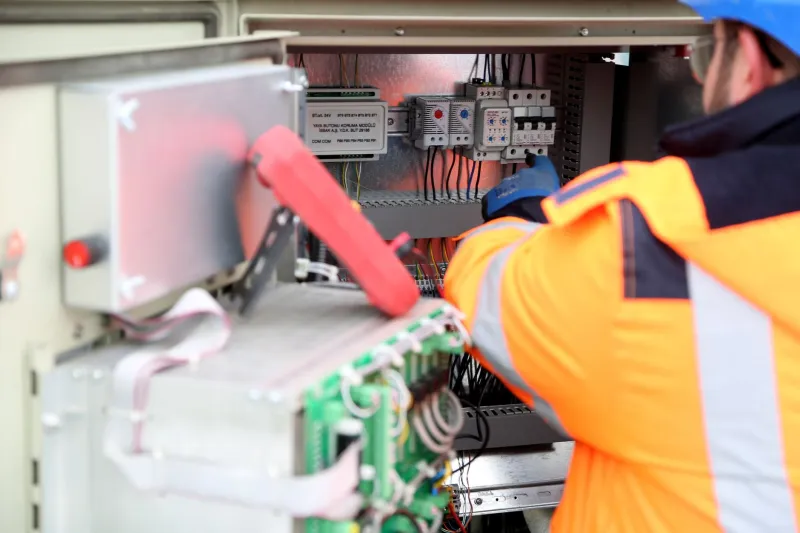
Several US carriers have begun implementing structured phantom load audits as part of their fleet efficiency programs. These audits typically involve deploying clamp meters and data loggers across aircraft bus segments during representative ground turns, capturing load profiles at intervals throughout the parking period. The resulting data is then mapped against the aircraft's electrical load analysis documentation to identify discrepancies—systems drawing more than their rated standby current, systems that should be de-energized but are not, and equipment that lacks a meaningful standby mode entirely.
The findings from these audits are frequently surprising. In multiple documented cases, operators have discovered that third-party connectivity equipment installed during mid-life cabin upgrades was drawing full operational current during ground turns because the installation had not been configured to utilize the equipment's low-power standby mode. In other instances, USB charging modules had been wired in a manner that bypassed the cabin power management system's ability to shed load during gate operations.
Emerging Best Practices for Standby Power Management
The industry response to phantom load proliferation is coalescing around several complementary strategies. The first is configuration management: ensuring that all installed equipment is programmed to enter its lowest available power state during ground operations, and that this configuration is verified as part of the post-installation acceptance process and subsequent maintenance checks.
The second strategy involves ground power discipline. Ensuring that aircraft are connected to adequate, properly functioning ground power units throughout gate turns eliminates the battery depletion risk, even if it does not reduce the phantom load itself. This requires coordination between airline ground operations teams and airport facility managers—a relationship that is not always well-structured at busy US hub airports.
A third approach, gaining traction among larger carriers, is the deployment of cabin power management systems capable of automatically shedding non-essential loads during defined ground operation phases. These systems can be programmed to de-energize IFE servers, passenger charging modules, and secondary connectivity equipment on a scheduled basis, restoring them to operational status only when the aircraft is approaching departure readiness.
Finally, some operators are beginning to incorporate standby power consumption as an explicit evaluation criterion in their avionics and cabin equipment procurement processes. Vendors are increasingly required to provide certified standby current specifications, and contracts are beginning to include provisions for configuration support to ensure low-power modes are properly implemented post-installation.
A Quiet Drain With Loud Consequences
The phantom load problem sits at an unglamorous intersection of electrical engineering, maintenance operations, and procurement policy. It lacks the visibility of a high-profile connectivity outage or a seat power failure that generates passenger complaints. But its financial and operational consequences are real, and they compound quietly over time across a fleet.
As US carriers continue to add sophisticated, power-hungry technology to aircraft cabins, the importance of managing what that technology consumes when it is not actively in use will only increase. The carriers that build rigorous standby power discipline into their fleet operations today will be better positioned to manage the electrical demands of tomorrow's connected aircraft—and better insulated from the maintenance costs that phantom loads, left unaddressed, will continue to generate.