Ninety Seconds to Recharge: The Turnaround Squeeze Redefining Ground Power Strategy

Photo by Photo by Zoshua Colah on Unsplash on Unsplash
The gate is a stopwatch. Every minute an aircraft sits at a US gate is a minute it is not earning revenue, and the industry's response over the past decade has been relentless compression. What was once a 45-minute domestic turnaround at carriers like Southwest or a legacy hub operation has, on select routes, been driven down toward 25 minutes — with some ultra-low-cost operators publishing schedules that leave almost no margin for error.
Buried inside that operational arithmetic is a problem few executives have quantified: the time available to restore, recharge, and verify cabin power systems has collapsed to almost nothing.
Where the Minutes Actually Go
Break down a compressed turnaround and the allocation becomes unforgiving. Passenger deplaning and boarding consume the majority. Baggage handling, catering, fueling, and cleaning run in parallel but each has hard physical limits. What remains for technical functions — the walkaround, the cabin check, the reset of IFEC systems, the confirmation that in-seat power is functioning — is often measured in single-digit minutes.
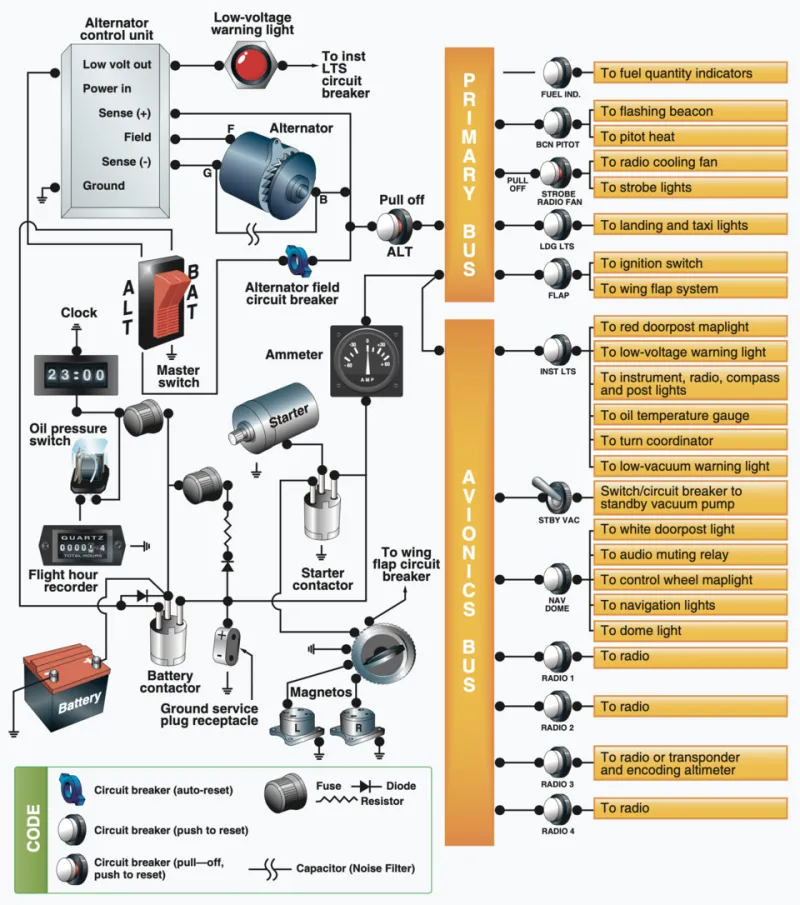
For aircraft that rely on ground power units (GPUs) or 400 Hz converters during the stop, the picture tightens further. A GPU must be connected, stabilized, and delivering clean power before cabin crews can verify seat electrification or before onboard systems begin replenishing batteries depleted across the previous leg. On a 25-minute turn, a five-minute delay in GPU connection can eliminate the entire technical buffer.
The Charging Deficit Nobody Is Counting
Modern connected cabins are battery-hungry in ways older fleets never were. Wireless access points, seatback IFEC units, USB-C power delivery modules, and electronic flight bag docks all draw from onboard energy reserves that were sized for a different era of operations. When a narrowbody flies six legs a day — increasingly common on high-utilization US domestic schedules — there may be no point in the operation where systems get more than a trickle of recharge time.
The consequences are subtle at first. Crews report intermittent seat power failures in the aft cabin on afternoon legs. IFEC boot times lengthen as system batteries sag. Maintenance logs begin accumulating deferred defects that cluster on high-cycle aircraft. None of these failures is dramatic enough to ground a plane, but collectively they erode the passenger experience that power and connectivity investments were supposed to deliver.
What Has to Change
Three adjustments are emerging among operators taking the problem seriously.
First, ground power delivery must be treated as a scheduled critical-path item, not an ad hoc service. Airports and ground handling providers increasingly need to guarantee GPU connection within the first minutes of arrival, particularly at outstations where equipment availability is inconsistent. Carriers that negotiate power availability into ground service agreements — with the same rigor applied to fuel contracts — are seeing measurable improvements in departure reliability.
Second, aircraft design and retrofit specifications should assume minimal ground recharge time. That means onboard energy storage sized to sustain cabin systems across a full day of flying, rather than assuming batteries will top up during brief stops. It also means power architectures that allow selective load shedding during ground operations so that available energy prioritizes the systems passengers actually notice.
Third, crew checklists need updating. The legacy post-flight procedure was written for cabins with a handful of electrical seats. Today's aircraft may have hundreds of powered positions, and a two-minute verification sweep is no longer realistic. Airlines are experimenting with automated system health reporting — cabin management systems that push power status to maintenance tablets before the aircraft reaches the gate — so human inspection time is spent only where the data flags a problem.
The Scheduling Feedback Loop
There is a circular risk here worth naming. Compressed turnarounds create power shortfalls. Power shortfalls generate maintenance deferrals. Deferrals create onboard failures that lengthen boarding times as passengers change seats or demand compensation. Those delays, in turn, pressure schedulers to compress turnarounds even further on other routes.
Breaking the loop requires acknowledging that turnaround time is not just a passenger flow problem — it is a power infrastructure problem. The carriers that internalize this early will find that their 25-minute turns hold up under scrutiny. The ones that don't will discover, as several already have, that the cheapest minute in aviation is the one you plan for, and the most expensive is the one you didn't.