The Powered Seat Premium: How In-Seat Charging Reliability Is Becoming a Revenue Management Variable
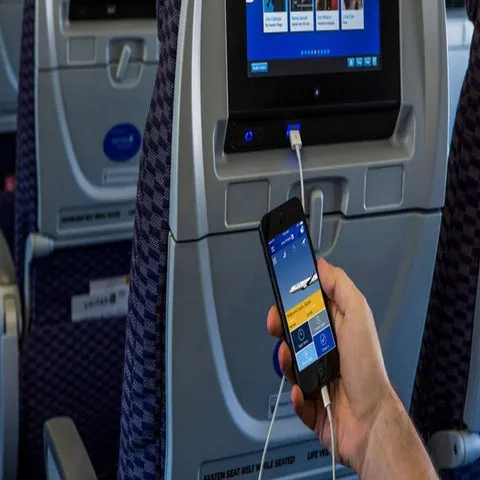
Photo: airline passenger charging laptop phone in-seat power business travel, via cdn.shopify.com
For decades, airline seat selection has been governed by a relatively stable hierarchy of desirables: extra legroom, window views, proximity to the front of the aircraft, and bulkhead positions that offer unobstructed space. Carriers have built sophisticated ancillary revenue programs around these attributes, charging premiums that passengers have come to accept as a standard feature of the booking experience.
A new attribute is beginning to enter this calculus—one that originates not in cabin geometry but in electrical engineering. In-seat power reliability, long treated as a binary amenity (present or absent), is emerging as a differentiating variable that revenue managers at several US carriers are now tracking, analyzing, and in some cases beginning to price. The implications for how airlines coordinate fleet investment decisions with commercial strategy are considerable.
Why Power Reliability Varies by Seat Position
To understand why in-seat power has become a revenue management conversation, it is first necessary to understand why power delivery is not uniform across an aircraft cabin. Aircraft electrical systems distribute power through a network of bus bars, circuit breakers, and wiring runs that were, on most legacy narrowbodies and widebodies, not designed with the density of passenger charging demand that exists today.
As carriers have retrofitted older aircraft with USB outlets, AC power ports, and in some cases wireless charging surfaces, they have done so by tapping into existing power distribution infrastructure. The result is a cabin where the electrical supply to passenger seats is not uniform. Seats near the front of the aircraft, closer to the primary power distribution panels, typically receive more consistent voltage. Seats in the aft cabin—particularly in the last several rows—are at the end of longer wiring runs and are more susceptible to voltage drop under load.
Middle seats in high-density configurations present additional complications. Armrest-mounted charging ports in center seat positions often share circuit capacity with adjacent aisle and window seats, creating a competitive draw scenario when multiple passengers charge simultaneously. On some aircraft types, this results in measurably slower charging rates or, in cases where the circuit protection trips, no charging at all.
These are not theoretical concerns. US carriers that have deployed cabin power monitoring systems—instrumentation that logs actual voltage and current delivery at the seat level—have documented significant variation in power delivery performance across seat positions on the same aircraft. The data tells a story that passengers have been experiencing experientially for years: not all powered seats are equally powered.
From Operational Data to Commercial Opportunity
The transition from recognizing this variation to commercializing it is a conceptual step that several carriers are now actively evaluating. The logic is straightforward. If a carrier can identify, with reasonable confidence, which seat positions on a given aircraft consistently deliver reliable, high-speed charging performance—and which do not—that information has commercial value. Passengers who depend on device power for productivity, particularly business travelers, are likely to pay a modest premium for the assurance that their seat will actually charge their laptop during a three-hour flight.
At least two US carriers are understood to be in early-stage analysis of what might be termed power-verified seat tiers: a classification system that distinguishes high-reliability charging positions from standard positions, with the former eligible for a premium selection fee. The model parallels the existing preferred seat framework, where carriers charge for positions that offer a marginal but real improvement in the passenger experience.
The challenge is validation. Unlike legroom, which can be measured and certified with a tape measure, power reliability is a dynamic characteristic that depends on aircraft configuration, installed equipment, and the aggregate load being drawn at any given moment. A seat that delivers reliable charging on a lightly loaded aircraft may underperform on a full flight where every passenger is simultaneously drawing current. Building a credible, defensible power-verified product requires either conservative certification based on worst-case load scenarios or real-time monitoring infrastructure capable of dynamically adjusting pricing based on predicted cabin load.
Revenue Management Meets Fleet Planning
What makes this development particularly significant is the organizational coordination it demands. Revenue management and fleet planning have traditionally operated with limited integration. Revenue managers optimize yield within the constraints of the existing product; fleet planners make infrastructure investment decisions on technical and maintenance grounds. The emergence of power reliability as a commercial variable forces these functions into closer alignment.
If a carrier's revenue management team identifies that aft cabin seats on a particular aircraft type are underperforming as a power product—generating passenger complaints, ancillary revenue underperformance, or negative reviews that reference charging failures—that data becomes an input into the fleet investment decision. The business case for a cabin power infrastructure upgrade is no longer purely an engineering or maintenance argument; it carries a quantifiable revenue dimension.
This dynamic is already reshaping how some fleet planning teams at US carriers present upgrade proposals internally. Rather than framing a cabin power modernization as a cost center investment with a soft passenger satisfaction benefit, planners are increasingly able to point to revenue management data showing the direct relationship between power reliability and ancillary seat revenue capture. The conversation changes when the ROI can be expressed in revenue per available seat mile rather than in maintenance cost avoidance alone.
Competitive Differentiation in a Crowded Ancillary Landscape
The broader competitive context matters here. US carriers have largely exhausted the obvious ancillary revenue opportunities—baggage fees, seat upgrades, and priority boarding are now table stakes rather than differentiators. The next generation of ancillary revenue growth will come from more granular product differentiation, and in-seat power reliability is well-positioned to play a role in that story.
Carriers that invest in cabin power infrastructure upgrades and build the monitoring capability to certify seat-level power performance will be positioned to market a product attribute that competitors with aging electrical systems cannot credibly offer. For business travelers—a segment that US carriers have competed intensely to capture and retain—the assurance of reliable device charging may carry more practical weight than marginal differences in legroom or seat width.
There is also a loyalty dimension. Frequent travelers who consistently select power-verified seats on a carrier that reliably delivers on that promise are building a product-specific preference that is difficult for a competitor to replicate without equivalent infrastructure investment. In a market where loyalty programs are under pressure and differentiation is elusive, a tangible, consistently delivered product advantage has real retention value.
The Infrastructure Investment Imperative
None of this is achievable without underlying investment in cabin electrical infrastructure. The power-verified seat concept is only credible if the aircraft can actually deliver consistent, high-quality power to the positions being marketed as premium. That requires attention to wiring architecture, circuit capacity, power management software, and—critically—the monitoring systems that allow operators to verify performance at the seat level rather than simply at the bus level.
For US carriers evaluating their cabin modernization roadmaps, the emerging revenue management dimension of in-seat power adds a new urgency to decisions that have too often been deferred. The window for building a differentiated power product ahead of competitors is open, but it will not remain so indefinitely. The carriers that act on this opportunity now will be writing the next chapter of ancillary revenue strategy at 35,000 feet.