Protocol Paralysis: The Proprietary Communication Deadlock That Is Quietly Costing Airlines Millions
Photo: SAS Scandinavian Airlines, Public domain, via Wikimedia Commons
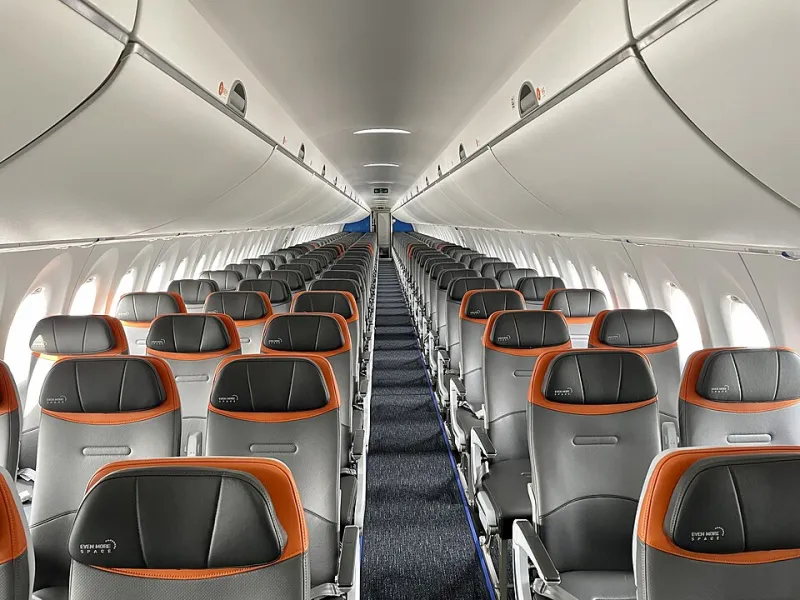
Board almost any commercial aircraft operating in the United States today and you are sitting inside a sophisticated technology environment that cannot fully describe its own condition. The seat power outlet beside you, the in-flight entertainment screen in front of you, and the cabin management system overhead are all drawing from the same electrical architecture—but in most cases, they are not speaking the same language. They cannot tell the aircraft's maintenance systems what they need, they cannot tell the airline's analytics platform what the passenger beside you is doing, and when something fails, they frequently cannot tell anyone precisely what went wrong or why.
This is the data cable problem: not a shortage of physical connectivity, but a fragmentation of communication protocols so severe that the systems sharing an aircraft's infrastructure operate in effective isolation from one another. The causes are historical, the incentives perpetuating the situation are structural, and the cost to airlines is compounding with every year the deadlock continues.
How the Fragmentation Was Built
The origins of today's protocol landscape trace back to the early development of in-flight entertainment as a distinct cabin system category. When the first generation of seatback IFE systems entered commercial service, there was no established industry standard governing how they would communicate with broader aircraft systems. Individual manufacturers developed proprietary protocols that served their own engineering requirements and, not incidentally, created switching costs that made their installed bases stickier.
This pattern repeated itself as cabin technology evolved. Seat manufacturers developing power delivery systems made their own engineering choices. IFE vendors built data architectures optimized for their own content management and billing infrastructure. Cabin management system developers created frameworks designed around their own product roadmaps. Each decision was rational from the perspective of the individual manufacturer. The cumulative effect was an aircraft cabin where multiple sophisticated systems coexist without meaningful interoperability.
The ARINC 429 and ARINC 664 standards provide some common ground at the avionics level, and newer cabin standards like ARINC 628 have attempted to address cabin system communication. However, compliance with these standards varies significantly across vendors and generations of equipment, and the standards themselves do not resolve the proprietary layers that individual manufacturers have built above them.
The Maintenance Visibility Problem
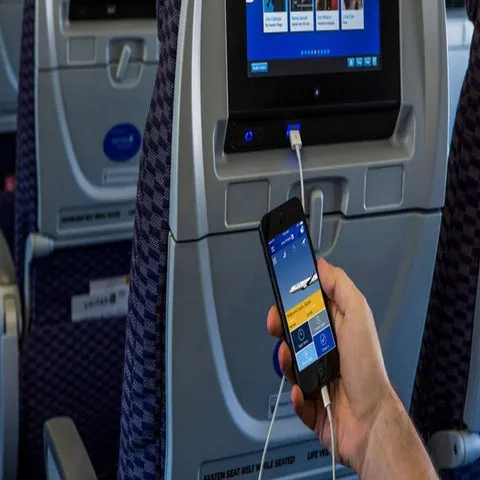
The most immediately quantifiable consequence of protocol fragmentation is its impact on maintenance operations. When an in-seat power outlet fails—a routine occurrence across any large fleet—the current diagnostic process in most aircraft relies on a maintenance technician physically locating and testing the affected seat. There is no automated fault reporting pathway that would allow the aircraft's maintenance systems to flag the failure before the passenger boarding process reveals it.
This matters operationally because cabin equipment faults discovered during boarding are among the more common contributors to departure delays. A seat power failure identified at the gate, with passengers already in the boarding queue, creates a decision tree that maintenance crews must navigate under time pressure: defer the seat, attempt a rapid repair, or in some cases reassign passengers. None of these outcomes is efficient, and all of them are more likely when the fault was not identified during the preceding maintenance window because the system had no mechanism to report it.
Predictive maintenance—the practice of identifying components approaching failure before they actually fail—requires a data stream that current cabin system architectures largely cannot provide. Seat power controllers, IFE units, and cabin management nodes that communicate only within their own proprietary ecosystems cannot contribute to the fleet-level failure pattern analysis that predictive models depend on. Airlines are effectively flying with diagnostic capabilities far below what the underlying hardware could theoretically support, because the communication layer to extract that data does not exist.
The Passenger Analytics Gap
Beyond maintenance, the protocol deadlock imposes a significant constraint on airlines' ability to understand and monetize passenger behavior. The commercial aviation industry has invested heavily in ancillary revenue programs, and in-flight purchases—connectivity upgrades, food and beverage, entertainment content—represent a meaningful and growing component of those programs. Maximizing that revenue requires understanding what passengers are doing, what they are responding to, and where friction in the purchase experience is causing abandonment.
In a fully integrated cabin data environment, an airline could track seat-level engagement with IFE content, correlate it with purchase behavior, identify patterns that suggest opportunities for targeted offers, and feed that information back into content and pricing decisions. This is not a speculative capability—the data exists in principle because the systems generating it are continuously operating. The problem is that the proprietary walls between those systems prevent the data from being aggregated in a form that airline analytics teams can use.
For US carriers competing aggressively on ancillary revenue performance, this gap represents a structural disadvantage relative to what integrated data architectures could enable. The magnitude of the foregone revenue is difficult to quantify precisely because it is defined by what hasn't happened, but industry analysts who have modeled the opportunity describe figures that would comfortably justify significant investment in interoperability infrastructure.
Why Manufacturers Aren't Solving This on Their Own
The competitive dynamics of the cabin technology supply market create limited incentive for individual manufacturers to champion open interoperability standards. A vendor whose proprietary protocol creates switching costs for airlines has a rational interest in maintaining that architecture, even if an open standard would benefit the broader industry. The collective action problem is classic: interoperability requires all parties to accept a reduction in their individual lock-in advantages, and no single party has sufficient leverage to compel that outcome unilaterally.
Airlines, however, are not without influence. Large US carriers purchasing cabin systems at scale have contractual leverage that they have not consistently exercised around interoperability requirements. Procurement specifications that mandate compliance with open communication standards, combined with performance penalties for systems that cannot deliver diagnostic data in accessible formats, would create market incentives that individual manufacturers would find difficult to ignore.
Industry consortia including APEX and IFSA have engaged with these questions, and there is growing recognition that the current fragmentation imposes costs that ultimately flow back to airlines in the form of reduced system value. Whether that recognition translates into the kind of coordinated standards push that would actually shift manufacturer behavior remains to be seen.
The Cost of Continued Inaction
For airline operations, technology, and commercial teams evaluating this landscape, the relevant question is not whether protocol fragmentation is a problem—it demonstrably is—but what the cost of accepting it for another equipment generation looks like relative to the cost of demanding something better.
Cabin technology refresh cycles are long. An airline that selects cabin systems today without requiring meaningful interoperability commitments is likely accepting the current diagnostic and analytics limitations for a decade or more. The revenue and operational efficiency opportunities that integrated cabin data would enable will continue to accumulate as unrealized potential throughout that period. Framed that way, the cost of inaction is not an abstraction. It is a specific, recurring financial consequence of a procurement decision made without sufficient weight given to the data architecture question.