Wired but Waiting: The Gap Between Cabin Power Investment and the Electricity That Never Reaches Every Seat

Photo: Luke Ma from Taipei, Taiwan ROC, CC BY 2.0, via Wikimedia Commons
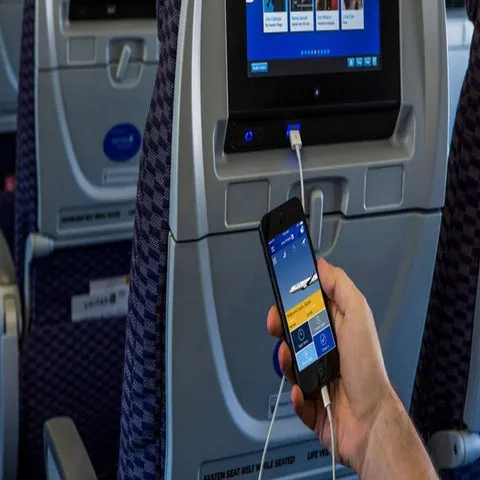
The marketing promise is simple: every seat, powered. The operational reality is considerably more complicated. Across a meaningful segment of the US commercial fleet, aircraft that have undergone cabin power retrofits — investments that can run into the millions of dollars per aircraft — are not delivering electricity to every seat they were ostensibly equipped to serve. Passengers in specific rows find dead outlets. USB ports illuminate but fail to charge. Power modules reset unpredictably or remain offline for entire flights.
This is not primarily a maintenance failure, though maintenance plays a role. It is a structural disconnect between the ambition of cabin power retrofit programs and the technical, financial, and operational realities that shape how those programs are actually executed. The gap is real, it is widespread, and it is costing airlines in ways that are both quantifiable and deeply underappreciated.
The Retrofit Promise and Its Hidden Constraints
When an airline commits to a cabin power retrofit program, the business case typically rests on passenger satisfaction data, ancillary revenue projections tied to device charging, and competitive positioning against carriers that have already completed similar upgrades. The capital allocation is approved, the STC is pursued, and the program enters the modification pipeline.
What the business case often underweights is the relationship between the wiring installed during the retrofit and the aircraft's actual power distribution capacity. Running conduit and installing seat power modules throughout a cabin is a discrete engineering task. Ensuring that those modules have adequate, stable electrical supply under all operating conditions — full passenger load, high ambient temperature, maximum IFE draw, galley equipment active — is a separate and considerably more demanding problem.
On many aircraft types, particularly older narrowbodies that form the backbone of US domestic operations, the electrical distribution architecture was not designed to support the loads that modern cabin power retrofits impose. Circuit breaker panels, bus structures, and wire gauge specifications that were adequate for original cabin configurations can become limiting factors when seat power density increases substantially.
Why Incomplete Rollouts Happen
The most common pattern in incomplete cabin power deployments involves a phased approach that was never fully completed. An airline may install power infrastructure in premium economy and select economy rows during an initial retrofit, with plans to extend coverage to the full cabin in a subsequent modification cycle. Budget constraints, shifting fleet priorities, or aircraft retirements intervene, and the second phase never materializes.
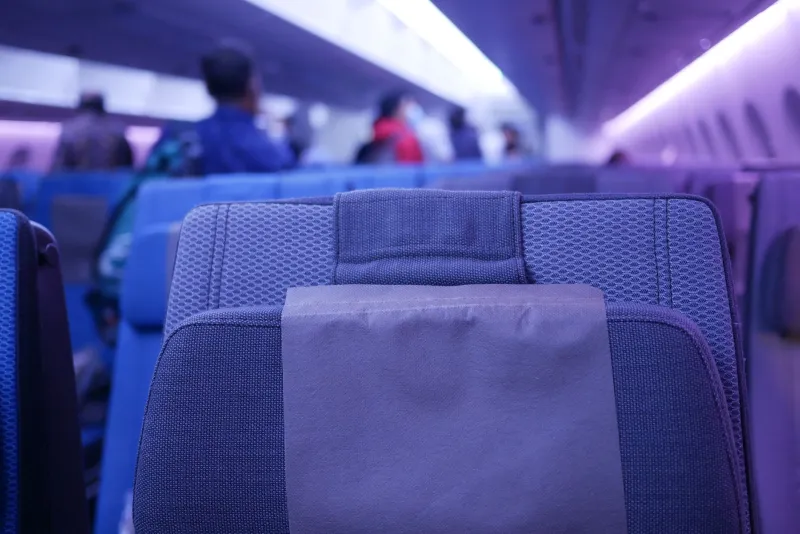
The aircraft enters service with partial coverage — adequate for the forward cabin, absent or unreliable in rows toward the rear. From a passenger perspective, seat assignment becomes a power lottery, with travelers who did not specifically research their aircraft configuration discovering their outlet status only after boarding.
A second, less visible driver of incomplete utilization involves power management software. Some retrofit programs install seat power modules across the full cabin but configure the system's load management software to shed power to certain zones when total draw approaches circuit limits. This is a legitimate engineering response to distribution constraints, but it means that the hardware investment in those zones delivers no passenger benefit during the flight conditions when demand is highest — precisely when passengers most want to charge their devices.
The Budgetary Architecture of Compromise
Retrofit programs are budgeted in phases for understandable reasons. Cabin modification work is expensive, time-consuming, and operationally disruptive. Spreading the investment across multiple maintenance cycles reduces the peak capital requirement and allows airlines to sequence work around fleet utilization demands. In theory, this phased approach is sensible financial management.
In practice, the first phase of a cabin power retrofit frequently consumes a larger share of available budget than projected, leaving subsequent phases underfunded or indefinitely deferred. STC development costs, engineering change orders, supply chain delays for seat power hardware, and the cost of extended maintenance downtime all have a tendency to expand beyond initial estimates. When the budget is exhausted and the aircraft needs to return to service, whatever coverage has been installed becomes the de facto final state — regardless of whether it matches the original program scope.
For airlines managing large fleets with staggered modification schedules, this dynamic can produce a situation where dozens of aircraft are operating with materially different cabin power configurations, making it difficult for revenue management and customer service teams to communicate consistent expectations to passengers.
The Passenger Experience Penalty
The consequences of incomplete power delivery are not abstract. Research consistently shows that in-seat power availability is among the top factors influencing passenger satisfaction on US domestic routes, particularly for business travelers who board with working devices and expect to remain productive during flight.
An aircraft where power works reliably in rows 10 through 20 but inconsistently in rows 25 through 35 does not deliver a premium experience — it delivers an unequal one. The passenger in row 32 who paid a standard fare and received no charging capability is not comparing their experience to the technical specifications of the retrofit program. They are comparing it to the last flight they took on a competitor's aircraft where their phone charged without incident.
For carriers competing aggressively on the US transcontinental and long-haul domestic markets, where premium economy and economy cabin differentiation is increasingly tied to technology amenities, the power delivery gap represents a direct threat to the revenue premium those seats are expected to generate.
Closing the Gap: What Operators Must Prioritize
Addressing the retrofit utilization gap requires airlines to approach the problem from several directions simultaneously. The first priority is an honest audit of actual power delivery performance across the fleet — not what the modification records indicate was installed, but what passengers experience seat-by-seat under real operating conditions. Cabin crew reporting, IFE system logs, and structured passenger feedback can all contribute to building an accurate picture.
The second priority is a technical review of distribution architecture on aircraft where power delivery is known to be inconsistent. In some cases, relatively modest interventions — upgrading specific circuit protection components, reconfiguring load management software parameters, or replacing aging power modules — can meaningfully improve coverage without requiring a full second-phase retrofit.
For aircraft where the distribution architecture is the fundamental constraint, operators must make an explicit decision about whether to invest in the electrical system upgrades required to support full cabin coverage or to manage passenger expectations through seat assignment and booking communication strategies. Deferring that decision indefinitely is itself a choice — one with ongoing passenger experience and revenue consequences.
The wiring is in the walls. Whether the power reaches every seat is a question of commitment as much as engineering.